Have you ever looked at your cramped laundry space and wondered whether it could ever feel like anything other than a frustrating afterthought? Tiny laundry rooms present unique challenges but they also offer remarkable opportunities for creative, satisfying solutions that larger spaces simply never demand.
Read: Small Bathroom Ideas
The secret lies in maximizing every single square inch while refusing to sacrifice either style or functionality. With the right approach and a handful of well-chosen ideas, your tiny laundry area can become one of the most organized, most enjoyable corners of your entire home.
Tiny Laundry Room Ideas
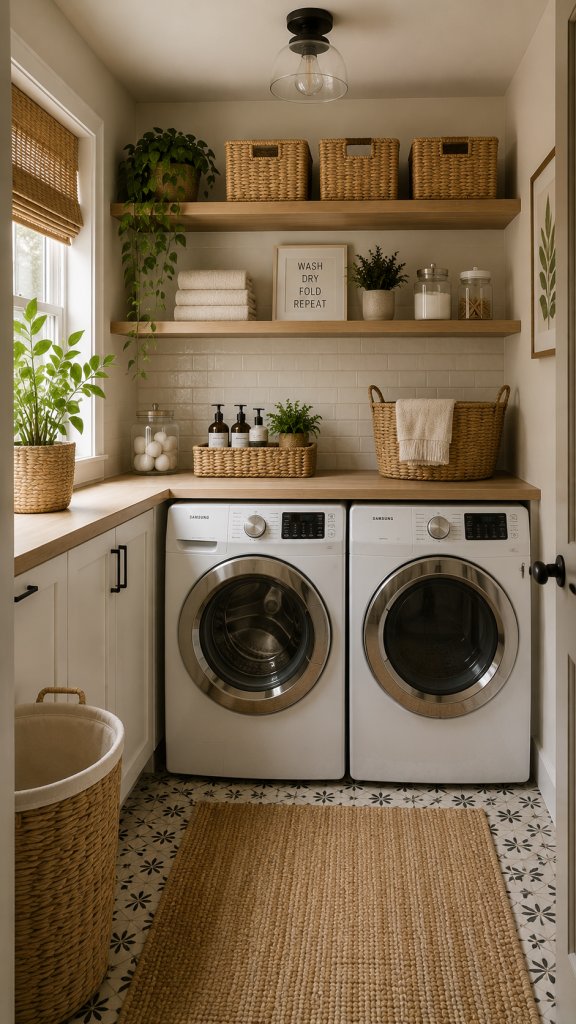
1. Incorporate Woven Baskets for Effortless Storage and Organic Warmth
If you invest in even a few high-quality woven baskets, you will quickly discover they transform visual chaos into something that looks genuinely considered without sacrificing accessibility or adding bulk.
These natural containers bring immediate warmth to laundry environments that would otherwise feel cold and purely utilitarian. Their versatility allows you to sort by category delicates in one basket, darks in another, linens in a third creating a system that functions reliably in real daily life rather than just in theory.
The textural quality of rattan or seagrass softens hard surfaces like tile, metal appliances, and painted walls in a way that plastic containers never can. A row of matching woven baskets on open shelving turns practical storage into a design feature worth noticing.
2. Install Stacked Front-Loading Machines to Double Your Floor Space
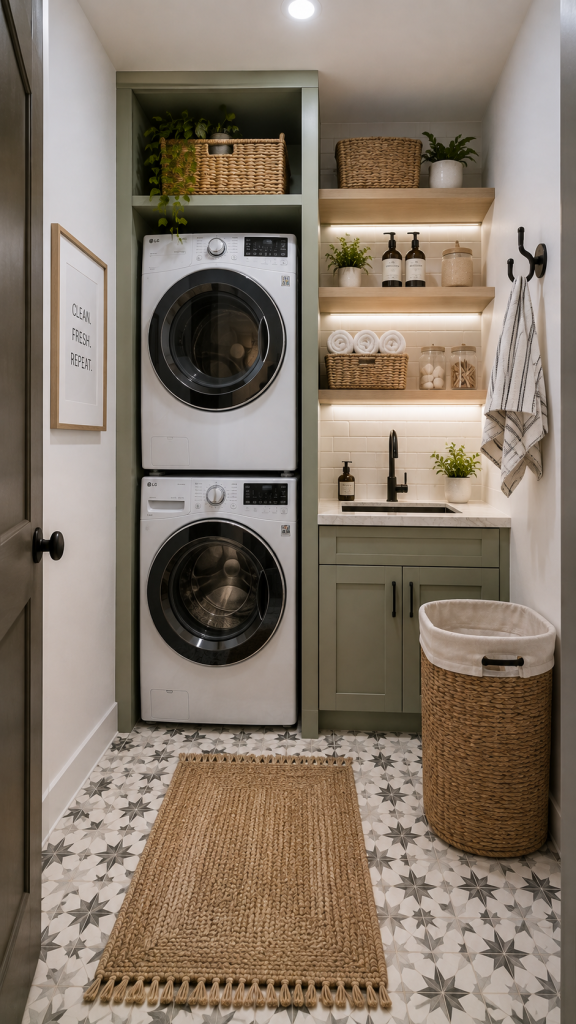
Vertical stacking is the single most impactful space decision you can make in a tiny laundry room. Full stop.
Placing the dryer directly on top of the washing machine reclaims the entire horizontal footprint that a side-by-side arrangement demands freeing that square footage for a folding counter, a rolling cart, or simply easier movement through the room. In a 4×6 laundry closet, this one change can feel genuinely transformative.
Front-loading machines make stacking practical in a way top-loaders never managed, and modern stacking kits anchor the dryer securely against vibration. Consider sliding the stacked pair into an alcove or closet so bifold doors can close across them entirely making the laundry disappear when it is not in use.
What other vertical opportunities might you be overlooking in your own space right now?
3. Use Brass Hardware and Faucets for Warm Farmhouse Character
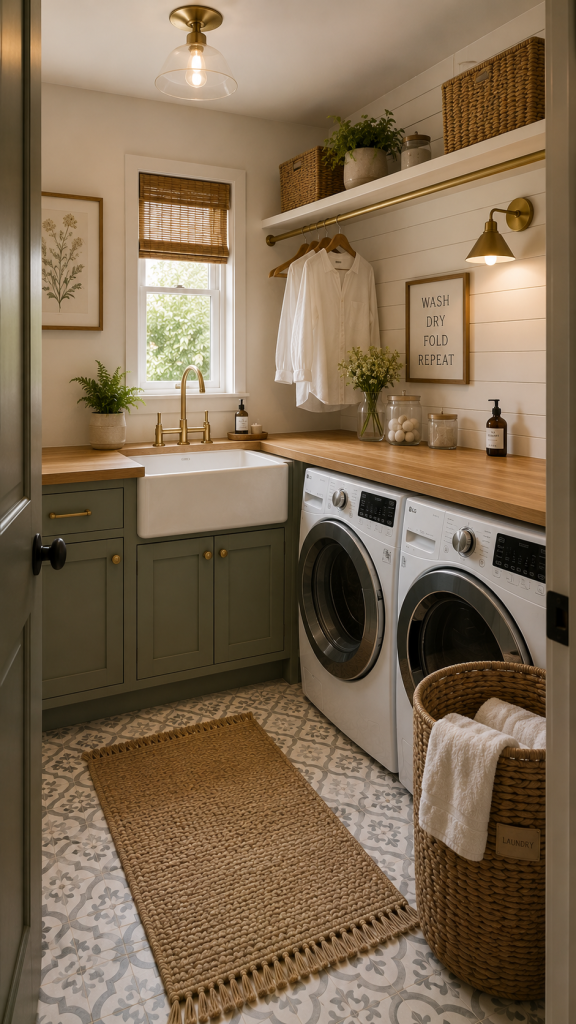
Chrome fixtures feel cold and clinical. Brass hardware radiates warmth that quietly transforms utilitarian laundry spaces into rooms that actually feel good to spend time in.
This metal choice bridges the gap between functional necessity and genuine aesthetic pleasure something most laundry rooms never attempt and immediately benefit from when they do. Brass develops a natural patina over time that adds character rather than showing wear as damage, which makes it particularly well suited to a hardworking room like this one.
Read: Farmhouse Kitchen Ideas
The golden undertones complement white cabinetry, natural wood elements, and stone countertops with equal ease. Pair brass faucets with matching cabinet pulls, a brass towel bar, and even a brass-finish pendant light for a unified farmhouse look that feels collected rather than purchased as a set.
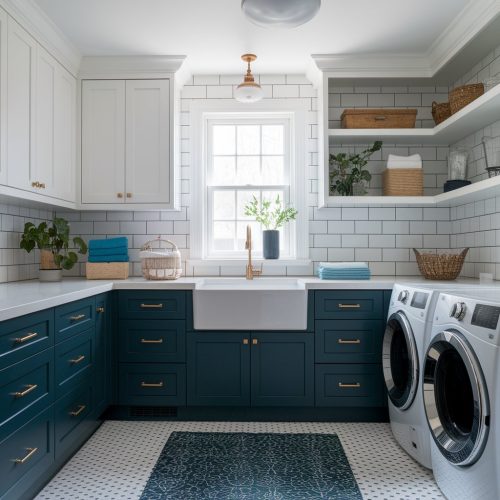
4. Add a Built-In Utility Sink for a Proper Laundry Workflow
A dedicated sink anchors a tiny laundry room by creating a defined zone for pre-treating stains, soaking delicates, rinsing cleaning equipment, and handling tasks that simply cannot happen inside a washing machine drum.
The psychological effect of having a proper sink is considerable and worth acknowledging. A laundry room with a sink feels like a legitimate, intentionally designed household space rather than a closet where appliances were crammed in as an afterthought. Deep utility basins handle large items like comforters and floor mats, while shallower options preserve space without losing the functional benefit.
Read: Stunning Green Bathroom Ideas
Begin planning your sink installation by mapping existing plumbing access points. Staying close to existing water lines significantly reduces installation cost and complexity a practical constraint that shapes the layout decision more than any aesthetic preference.
5. Display Detergents in Clear Glass Jars for a Seamless Organized Look
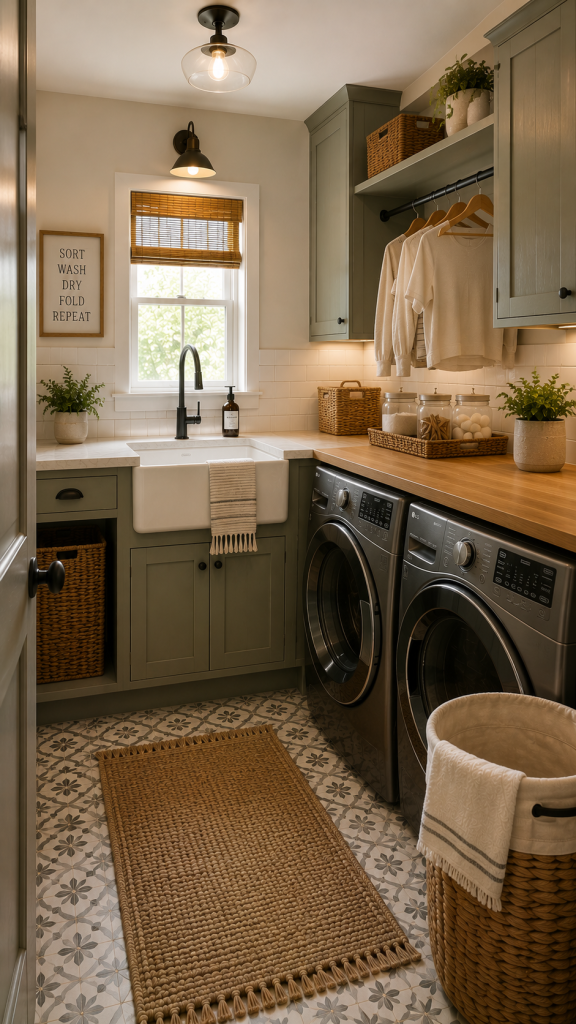
Three things make this storage approach work so consistently well: immediate visibility, visual calm, and a subtle nudge toward portion awareness. Start with visibility.
Clear glass jars let you assess quantities at a glance during a load no fumbling with oversized commercial packaging or hunting through a cabinet for the right product. Detergent pods, dryer sheets, stain sticks, and scent boosters transferred into uniform glass containers create visual calm that commercial packaging actively disrupts with its competing colors and fonts.
The uniform containers also make your laundry shelf look genuinely curated closer to an apothecary display than a supermarket aisle. This approach simultaneously prevents overbuying, since you can see exactly what remains before a shopping trip. Practical and beautiful, which is the combination every tiny laundry room needs most.
6. Position Appliances Beside a Window for Natural Light and Fresh Air
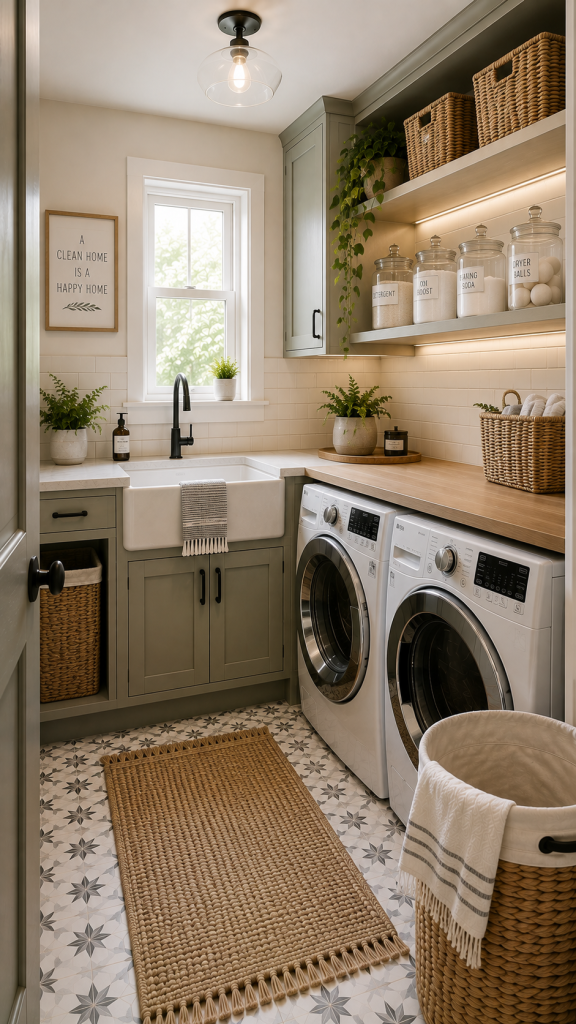
Dark laundry rooms feel oppressive. They make tasks harder than they need to be and quietly drain the motivation to maintain organization over time. Natural light solves this problem more effectively than any artificial lighting solution and at zero ongoing cost.
Window placement proves especially valuable in apartment laundry rooms where air circulation helps control humidity from washing and drying cycles humidity that, unmanaged, creates the musty smell that plagues poorly ventilated laundry spaces. The improved visibility also aids stain identification and color sorting, two tasks that artificial lighting frequently makes more difficult than necessary.
As a result, you will naturally spend more time in the space maintaining better organization and enjoying the routine more simply because the room feels bright and welcoming rather than cramped and dim.

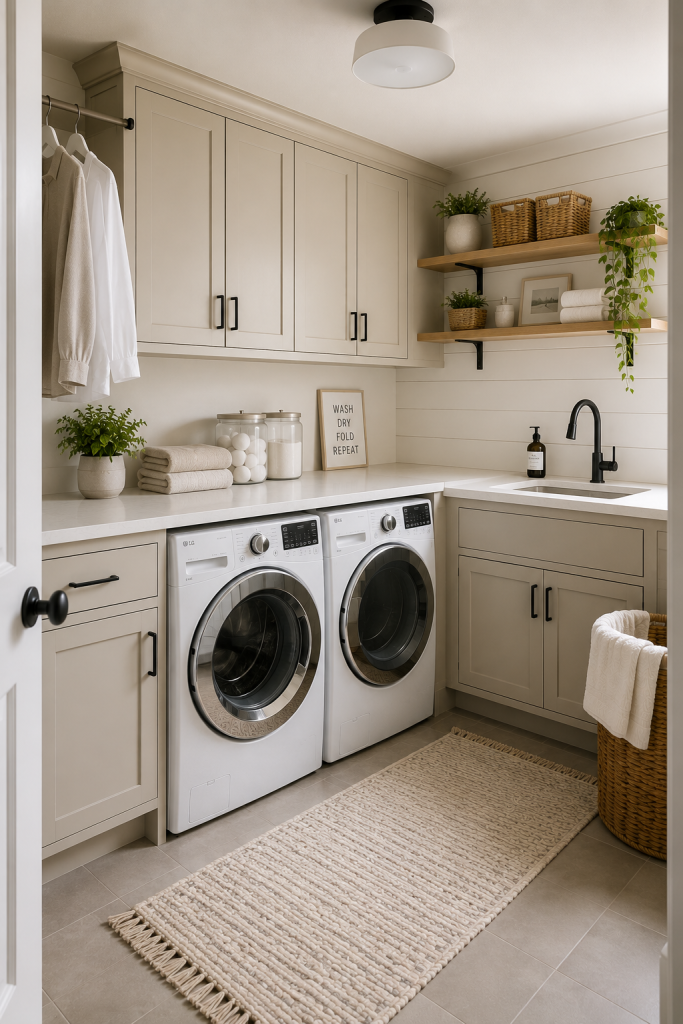
7. Showcase Neutral Cabinetry for Timeless and Adaptable Style
Why commit to a trending cabinet color that requires updating in three years when neutral cabinetry provides a perfect backdrop for evolving tastes indefinitely?
Classic whites, warm off-whites, soft sage greens, and light greys create lasting beauty that flexes with changing design preferences rather than fighting them. Neutral cabinets serve as a foundation that accommodates seasonal touches, colorful storage containers, new hardware choices, and personal artwork without creating visual competition for attention.
The simplicity of a neutral palette also allows other elements interesting hardware, natural textures, a bold floor pattern to function as genuine focal points rather than competing with cabinetry that is trying to do the same thing.
One caution, however: avoid neutral tones so flat and bland they create a hospital-like atmosphere that drains energy from the room entirely. Warmth within neutrality is the goal off-white rather than stark white, warm grey rather than cool grey.
8. Hang a Single Pendant Light for Focused Modern Illumination
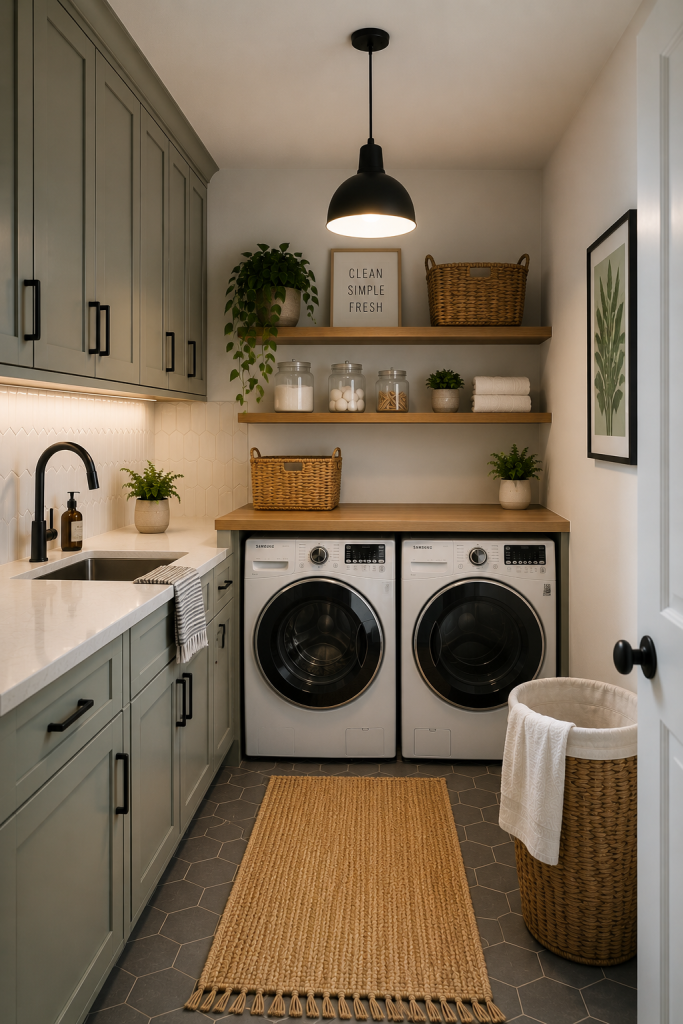
Overhead lighting rarely receives the attention it deserves in laundry room planning yet it shapes both the functionality and the mood of the room more than almost any other single element.
A well-positioned pendant light provides focused, downward illumination exactly where you need it most: above the folding surface, above the sink, or centered over the washing machine. This direct beam creates a defined work zone that makes your compact space feel purposeful and deliberately designed rather than assembled without consideration.
Modern pendant lights in warm-toned finishes brushed brass, matte black, or aged bronze add visual interest at ceiling height while eliminating the shadows that make stain identification and color sorting unnecessarily difficult. A pendant also signals design intention in a room where that quality is rarely expected, which creates a disproportionately strong impression.
9. Feature Bold Wallpaper for a Striking Small Laundry Room Personality
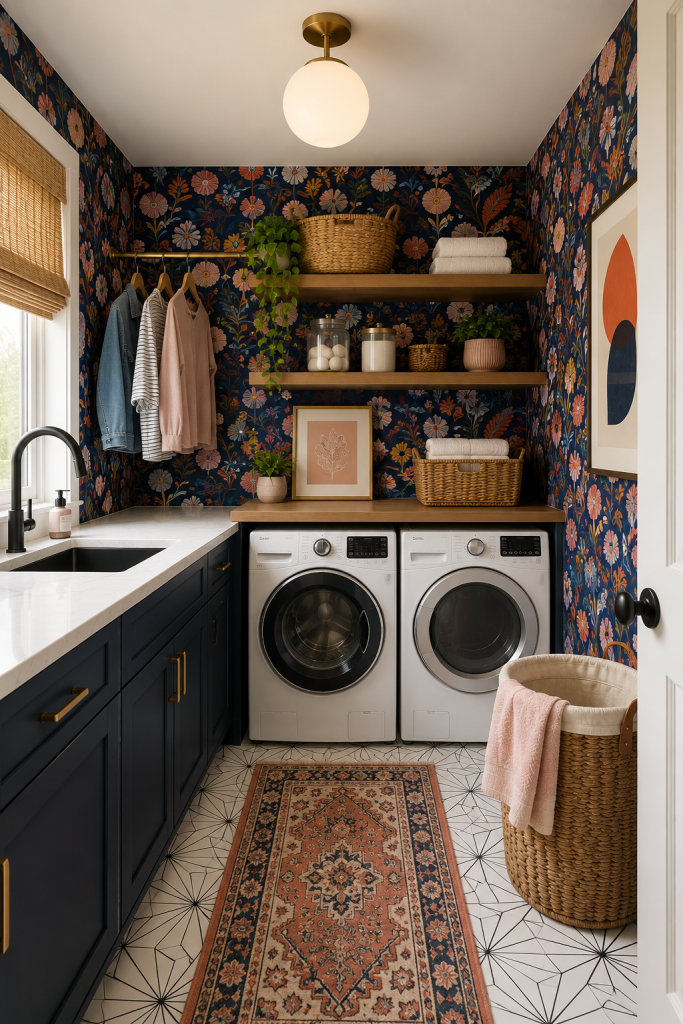
Contrary to the conventional wisdom that small rooms require minimal pattern and restrained color, bold wallpaper can make compact laundry areas feel more spacious, more interesting, and far more enjoyable to be in simultaneously.
Large-scale botanical prints, vintage-inspired geometrics, and graphic stripe patterns create visual depth that pushes walls outward perceptually. The dramatic transformation happens because bold patterns draw attention upward and outward, creating the illusion of expanded space while introducing the kind of personality that makes a mundane routine genuinely more pleasant.
Bold patterns also camouflage minor wall imperfections and awkward architectural details that plain paint tends to highlight rather than forgive. In a small room where you have limited surface area to work with, a single wallpapered wall can accomplish more than a complete fixture update.
Read: Blue Bathroom Ideas
From here, you can build complementary design elements that either harmonize with or provide deliberate contrast to your statement wall making every subsequent decision easier because the room already has a clear visual direction.
10. Layer Natural Fiber Rugs for Softness and Sound Absorption
Many cultures have traditionally used layered textiles to define spaces and add comfort to utilitarian rooms and this instinct translates perfectly into modern laundry room design for reasons that go well beyond visual appeal.
Natural fiber rugs in jute, sisal, cotton, or bamboo absorb sound from running appliances the hum and vibration that a hard-tiled room amplifies into something noticeably intrusive. The cushioning underfoot during long folding sessions reduces physical fatigue in a way that hard tile surfaces never can. The layered approach allows you to combine textures and scales, creating visual interest in a space that might otherwise feel completely flat.
As a result, the laundry room becomes a genuinely more comfortable environment one that encourages you to spend time organizing and maintaining it rather than rushing out the moment the machine stops.
11. Opt for Glass-Front Cabinet Doors to Expand the Room Visually
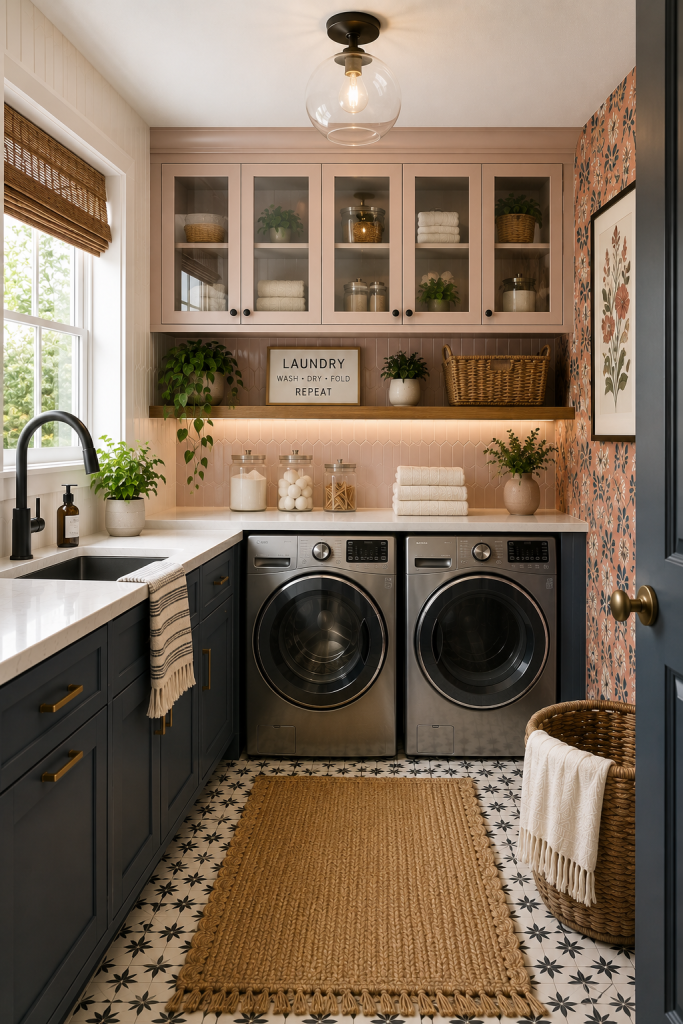
When you choose glass-front cabinet doors over solid panels, you create the strong impression of expanded space while maintaining full protection for stored items a combination that solid doors and open shelving individually cannot match.
Glass fronts force a certain organizational discipline since contents remain permanently visible, but this accountability genuinely improves long-term functionality. You locate needed items immediately without opening multiple doors and scanning through stacked products. The transparency creates visual continuity that makes your compact room feel more open and less enclosed by cabinetry.
The reflective quality of glass also bounces both natural and artificial light around your small space, multiplying the effect of whatever illumination you have. Consider frosted or reeded glass if you prefer to soften the view of contents while preserving the space-expanding and light-reflecting benefits.
Practical tip: install battery-operated LED strip lights inside glass-front cabinets to create a custom built-in appearance that rivals expensive kitchen cabinetry at a fraction of the cost.
12. Mount a Foldable Wall Drying Rack for Maximum Flexibility
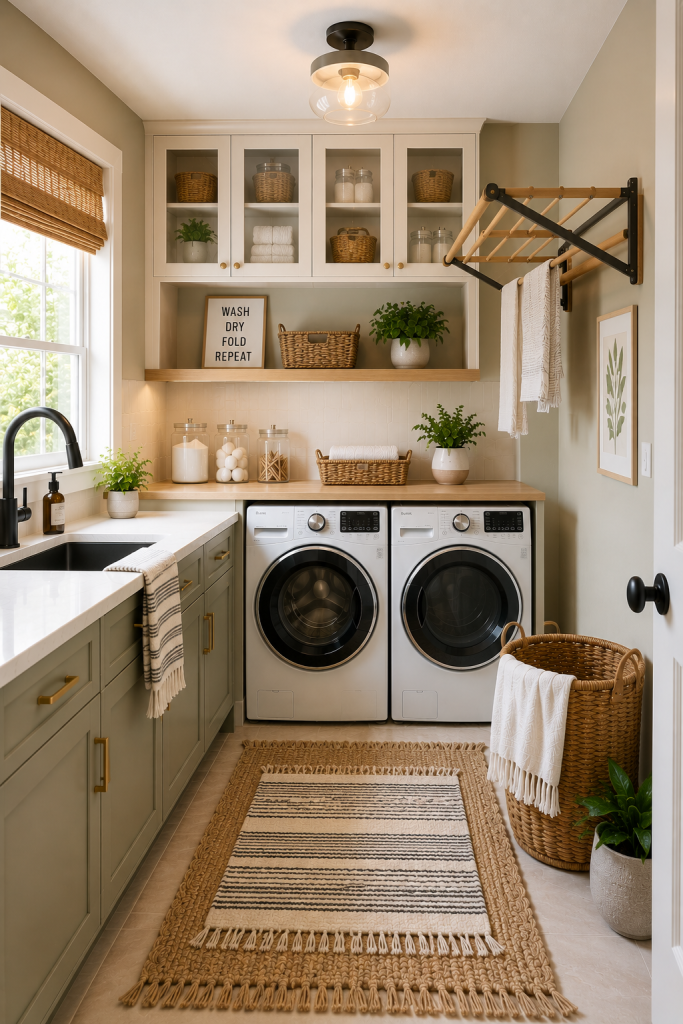
Think of a wall-mounted folding drying rack as the Swiss Army knife of tiny laundry room equipment compact and invisible when not needed, substantial and genuinely useful when extended.
In a narrow laundry closet where floor space is the scarcest resource, a wall-mounted rack folds down to accommodate delicate items, air-dry pieces, and anything the dryer should never touch, then folds back flat against the wall when the task is complete. This flexibility delivers real functional capacity without the permanent footprint of a freestanding rack that occupies space continuously whether in use or not.
Read: Green Bedroom Ideas
One caution: avoid mounting racks too high above shoulder level. Loading and unloading wet garments at an elevated position becomes physically demanding quickly and safety concerns arise when stretching with heavy, wet items. Position for comfortable use rather than maximum wall height.
13. Embrace Geometric Floor Tiles for a Chic and Dynamic Foundation
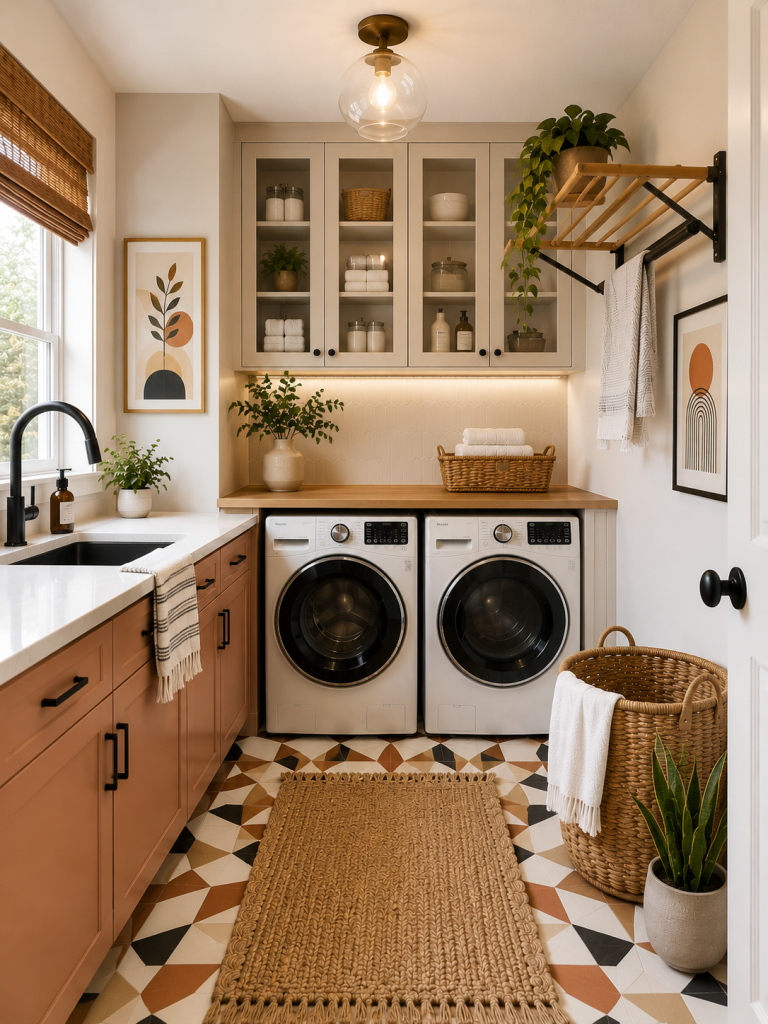
Floor tiles are the foundation that can either make or quietly undermine your laundry room’s visual impact yet most people settle for basic white squares that contribute nothing to the space’s character.
Geometric patterns create movement and visual interest that transforms utilitarian floors into genuine design statements. A hexagonal tile pattern makes a narrow laundry room appear wider by generating visual flow that guides the eye across the width of the space rather than drawing attention to its restrictive length. A chevron or herringbone pattern creates a similar effect with a more directional energy.
Geometric choices work particularly well in laundry rooms because the space typically contains minimal furniture to compete with floor pattern. The tile design can serve as the room’s primary decorative element doing work that would otherwise require wallpaper, art, or other surfaces to accomplish. Bold floor, restrained walls one of the most reliable combinations in small room design.
14. Hang Eucalyptus Branches for Natural Fragrance and Organic Beauty
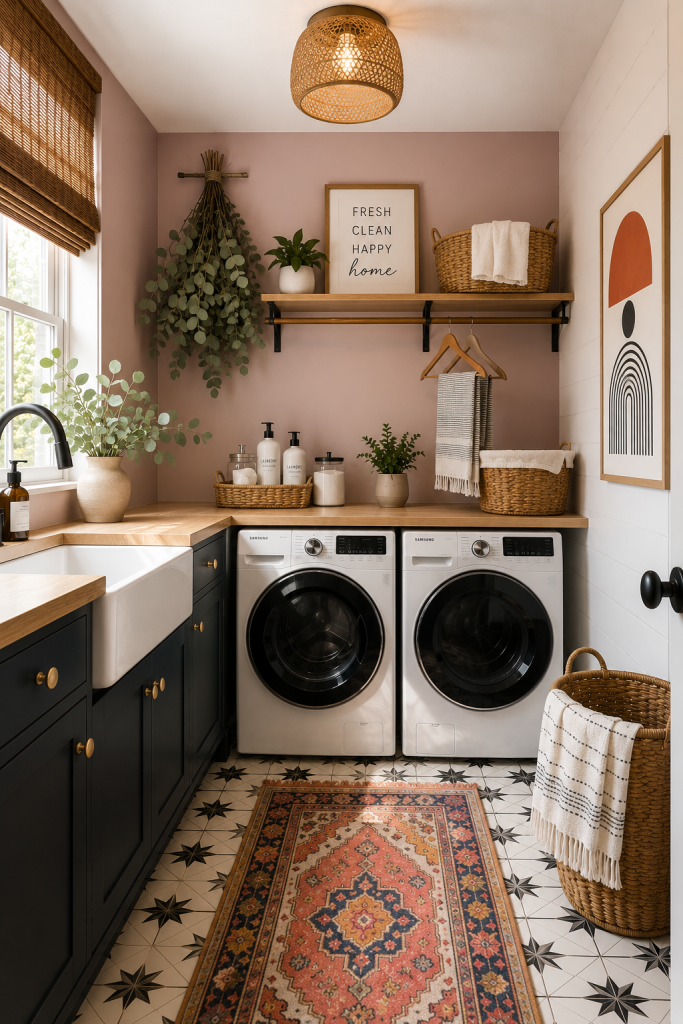
Fresh eucalyptus bundles hung near the dryer vent or from a hook beside the window require almost no maintenance while providing natural fragrance that genuinely improves the laundry experience in ways synthetic air fresheners cannot replicate.
The silvery-green foliage introduces organic material that softens the hard surfaces and mechanical appliances that dominate laundry rooms. Steam from the dryer activates the eucalyptus oils, releasing a subtle, clean scent that permeates freshly dried clothes with something that smells genuinely natural rather than chemically manufactured.
Eucalyptus has been valued for centuries for its natural properties and clean fragrance making it particularly well matched to an environment where cleanliness and freshness are the entire point. Replace bunches monthly for consistent fragrance, or allow them to dry in place and enjoy the dried botanical as a permanent decorative element.
15. Frame Windows with Woven Shades for Texture and Light Control
Consider how natural woven window shades bamboo, rattan, or grasscloth can transform an exposed window from an architectural awkwardness into a warm, textural feature that ties the room’s organic design elements together.
Woven shades filter natural light beautifully throughout the day, softening direct sun into a warm, diffused glow that feels considerably more pleasant than either harsh direct light or the flat dimness of a fully covered window. The natural texture adds visual warmth that counterbalances cold appliance surfaces, painted cabinetry, and hard floor tiles in a way that fabric blinds rarely achieve.
These treatments also manage the direct sunlight that can fade darker fabrics left on folding surfaces and make small enclosed spaces uncomfortably warm in summer months creating a more practical working environment while simultaneously improving the room’s visual quality.
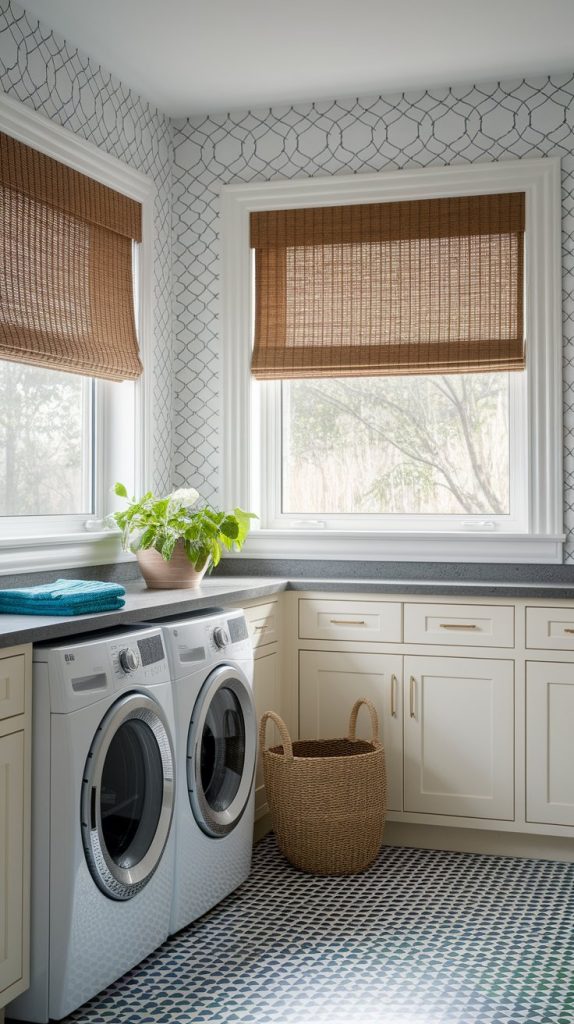
16. Balance Open and Closed Storage for the Most Functional Layout
The most functional tiny laundry rooms share one consistent characteristic: they combine visible storage for frequently used items with fully concealed storage for everything else and they make this distinction deliberately rather than by accident.
Open shelves or glass-front cabinets hold everyday essentials detergent, fabric softener, stain remover where you can grab them without opening a single door. Closed solid cabinets hold backup supplies, seasonal items, cleaning equipment, and anything that has visual clutter but genuine utility. The separation is simple in principle and transformative in practice.
This mixed approach prevents the visual overwhelm that all-open storage creates while maintaining the accessibility that all-closed storage constantly frustrates. Take action today by auditing your current laundry supplies and sorting them into two categories: things you reach for every load, and things you use occasionally. Let that audit drive your storage layout decisions entirely.
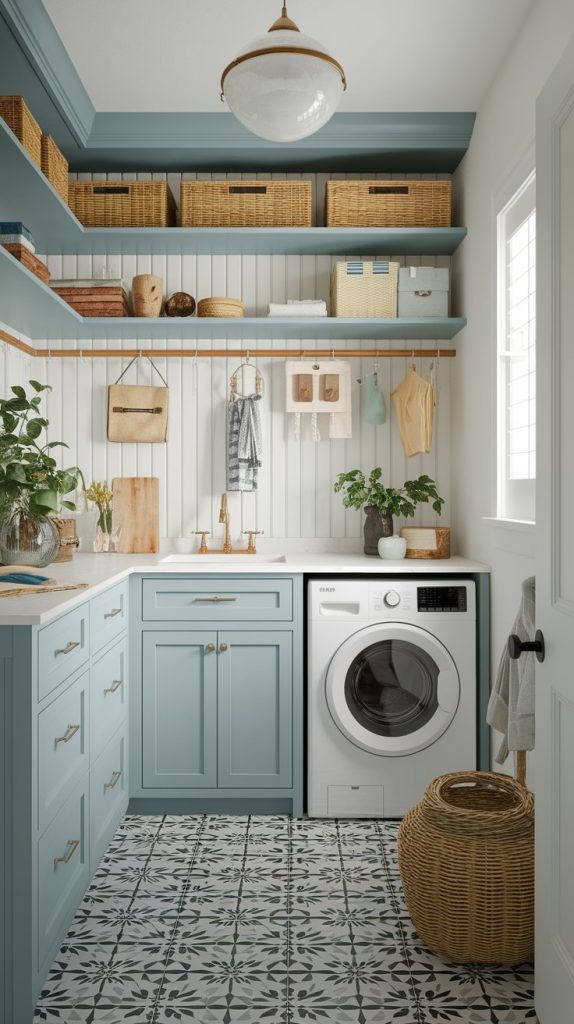
17. Install a Wall-Mounted Folding Table for a Flexible Work Surface
The movement toward multifunctional, space-saving furniture has genuinely revolutionized small room design across every category and the laundry room benefits from this shift more than almost any other space in the home.
A wall-mounted folding table provides a substantial, stable work surface for folding clothes, sorting items, and handling hand-wash tasks, then folds completely flat against the wall when the work is done leaving that floor space entirely clear for movement or other uses. This flexibility allows a tiny laundry room to function as a proper working space during laundry time without feeling permanently cluttered by a fixed table that occupies the room whether useful or not.
Looking ahead, expect to see increasingly sophisticated folding and collapsing furniture solutions as manufacturers respond to the growing demand for flexible small-space living solutions that make compromising between function and space feel increasingly unnecessary.
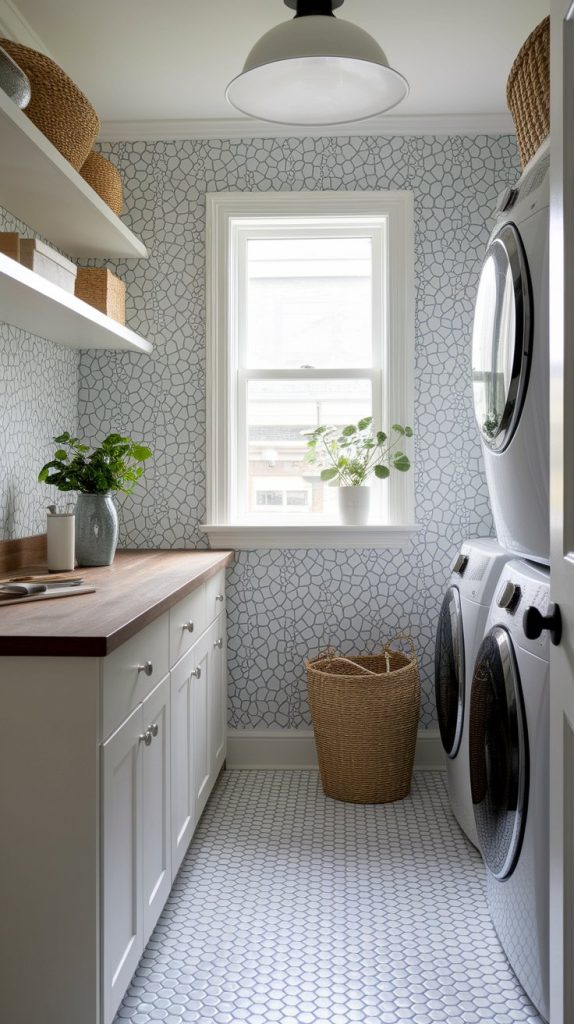
18. Select Bold Patterned Tiles for Dramatic Laundry Room Personality
Let’s be straightforward about something: most laundry rooms are boring white boxes that nobody chooses to spend a single extra second in. Bold patterned tiles chevron, encaustic, Moroccan, or graphic geometric dismantle this mundane expectation with visual confidence that rivals the best-designed rooms anywhere in the home.
The pattern creates rhythm and movement that makes the room feel dynamic and genuinely designed rather than merely functional. Dark chevron tiles in particular bring a graphic sophistication that seems completely at odds with the utilitarian nature of the space which is precisely what makes the combination so effective. Unexpected design choices in unexpected rooms create the strongest impressions.
The pattern also serves a quietly practical purpose: it camouflages the scuffs, detergent drips, and wear marks that accumulate on laundry room floors over years of use. A patterned floor looks intentional; a plain white floor simply looks dirty.
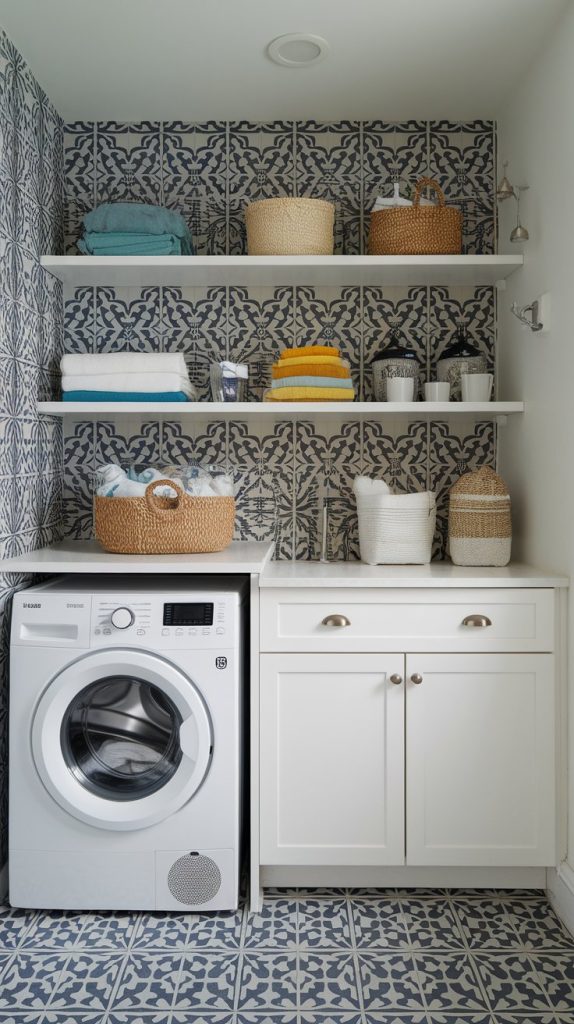
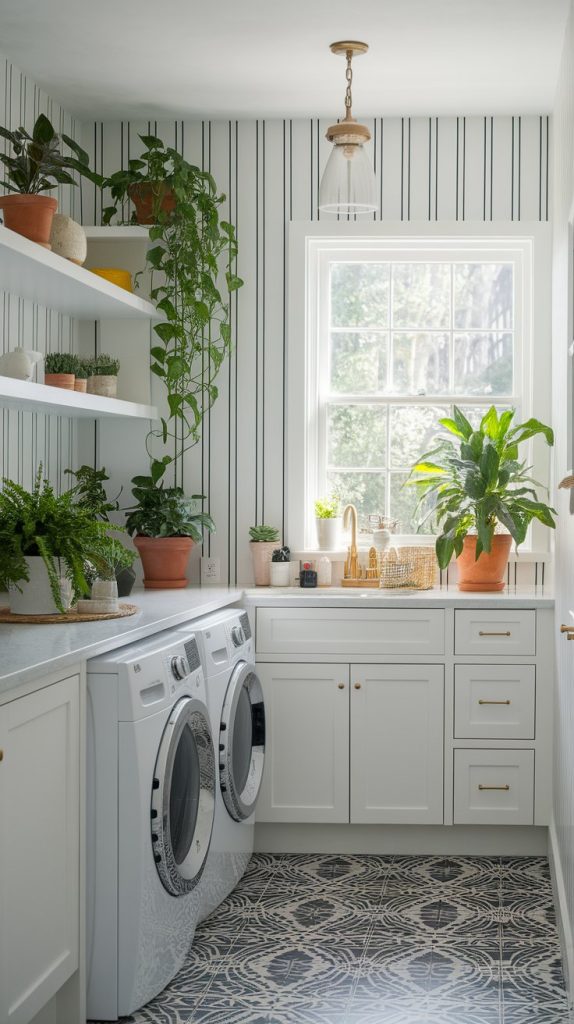
19. Integrate Lush Potted Plants to Bring Life Into the Laundry Room
What if your laundry room felt more like a bright garden corner than a basement utility space? Strategic plant placement creates exactly this transformation while delivering measurable improvements in air quality a particularly valuable benefit in spaces that generate humidity and collect lint.
Choose plants that thrive in low-to-moderate light and genuinely benefit from the humidity that washing machines and dryers produce: snake plants, pothos, peace lilies, and ZZ plants all fit this profile. Position them on top of the machines, on floating shelves above appliances, or in tall floor pots in corners where nothing else can usefully go.
Practical tip: select humidity-loving varieties specifically so the laundry room’s operating environment actually improves plant health rather than challenging it. A thriving plant looks considerably better than a struggling one and a struggling plant signals neglect rather than care.
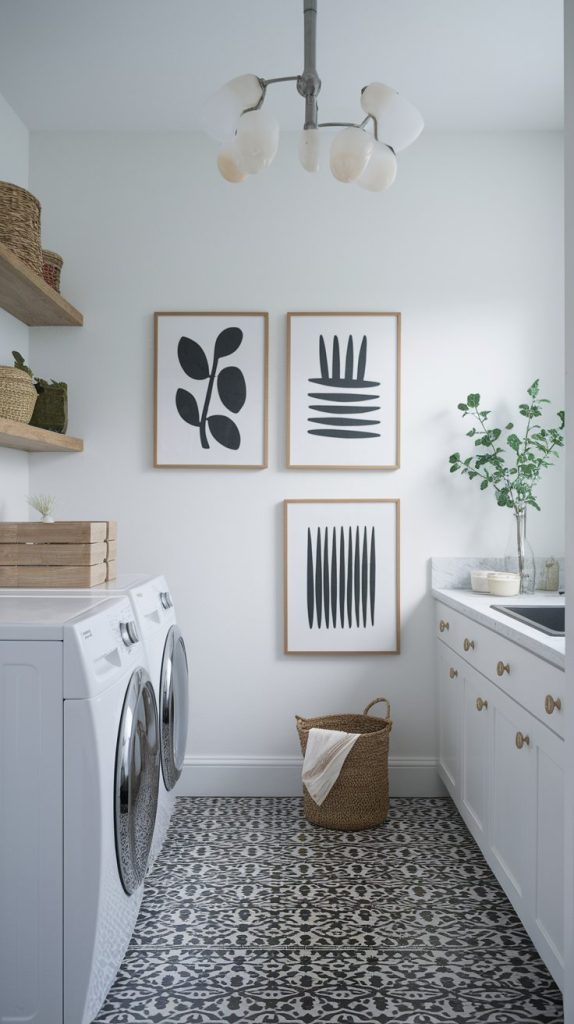
20. Hang Minimalist Art Prints to Make the Space Feel Deliberately Designed
Why should laundry rooms remain permanently art-free zones when a single framed print costs almost nothing and changes the entire character of the room?
Simple line drawings, clean botanical illustrations, or quiet typographic prints hung on an empty wall above the machines or beside a window signal that this space has been considered that the person who uses it every week thought it deserved the same attention as any other room in the home. That signal matters more than the artwork itself.
Choose frames in a finish that matches your hardware for a cohesive, collected look. Cluster two or three prints of different sizes for a gallery wall effect, or hang a single oversized print for a bolder statement. Either approach transforms a utilitarian wall into a visual destination.
Read: Kitchen Island Ideas
21. Add a Retractable Clothesline for Clever Indoor Air-Drying
A wall-mounted retractable clothesline extends across the room when you need to air-dry delicates and retracts completely out of sight when you do not which means it occupies exactly zero visual or physical space for every moment it is not actively in use.
This solution proves particularly valuable for households that regularly hand-wash items or need to air-dry fabrics that cannot safely go in a dryer. Wool sweaters, silk blouses, linen shirts, and delicate intimates all benefit from horizontal hanging that prevents the stretching that vertical drying racks can cause.
Install at a comfortable reach height between two parallel walls or between the wall and a sturdy cabinet side. The mechanism is simple, reliable, and inexpensive yet it adds a capability to the room that significantly reduces reliance on the dryer for every single load.

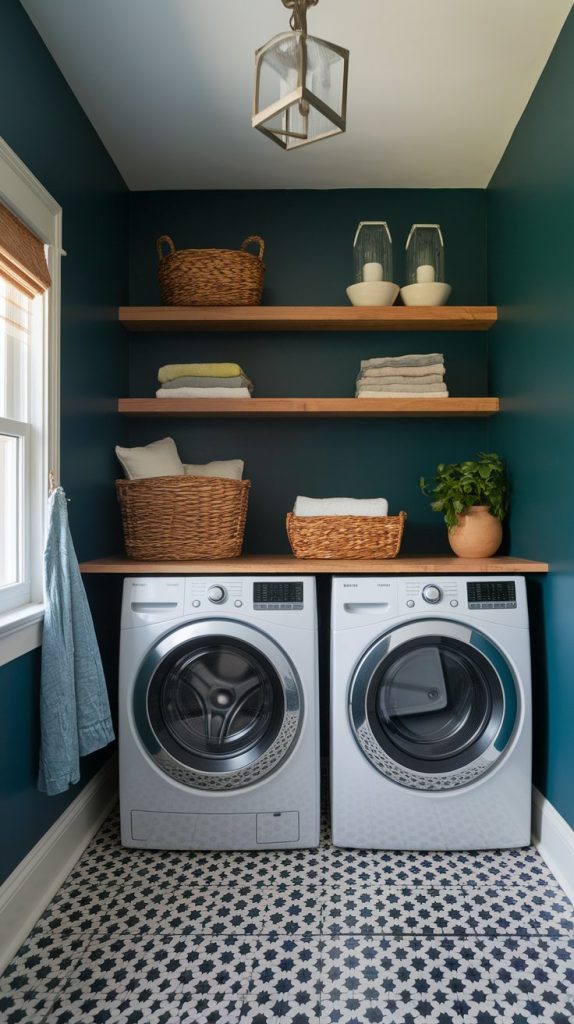
22. Paint an Accent Wall in a Deep Tone to Anchor the Entire Room
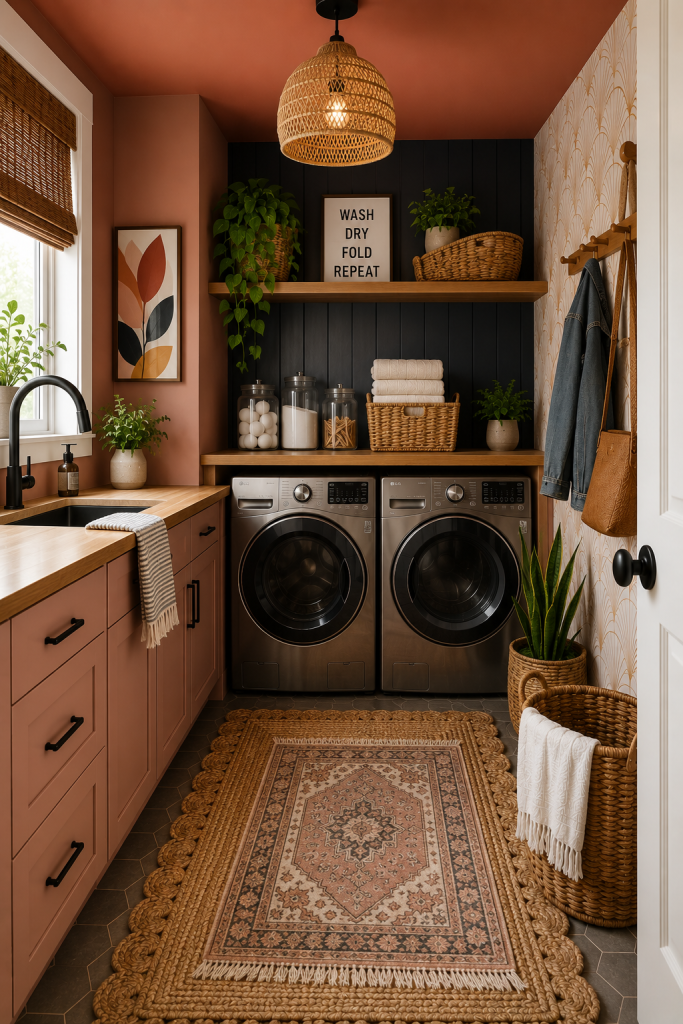
One deeply painted wall in a tiny laundry room does something counterintuitive: it makes the space feel larger, not smaller. Deep navy, forest green, terracotta, or charcoal on a single wall creates visual depth that flat, uniform paint color across all four walls completely lacks.
The accent wall anchors the room by giving the eye a destination a surface with genuine weight and presence that the other walls respond to rather than compete with. Position the deep color on the wall behind the appliances so the machines sit against a considered backdrop rather than floating against white paint that draws no attention whatsoever.
Pair the deep accent color with warm brass or black hardware, natural wood shelving, and woven baskets in complementary tones. Three elements working in the same color direction create a room that looks like it was designed rather than assembled which is the impression every tiny laundry room is capable of making, and so rarely does.
Start Your Small Laundry Room Transformation Today
Your compact laundry room holds far more potential than its square footage suggests for improved functionality, elevated style, and a daily experience that feels considerably less like obligation and considerably more like a routine worth doing well.
These twenty-two ideas provide the full roadmap. The only remaining step is choosing the one or two that address your most pressing pain points and beginning there. Stack the machines to reclaim the floor. Bring in a pendant light to change the mood. Add a woven basket and a glass jar of detergent pods to the shelf above the washer.
Read: Tiny Kitchen Ideas
Small improvements build momentum. Momentum builds transformation. And transformation, in a room this size, happens faster than you might expect.