
How do you turn a bathroom that already feels too small into a space that also handles laundry without sacrificing style, comfort, or your sanity? The challenge seems impossible at first glance. Fitting a washing machine into an already tight layout while keeping the room beautiful and functional feels like a contradiction in terms.
Yet with the right design choices and a willingness to rethink how every square foot works, you can create a bathroom that handles twice the workload without ever looking like it does. The secret lies in smart vertical thinking, multifunctional fixtures, and finishes that expand rather than shrink your perceived square footage.
Bathroom Ideas with Washing Machine
1. Maximize Vertical Storage to Reclaim Every Inch of Wall Space
Look up. That is where your solution begins.
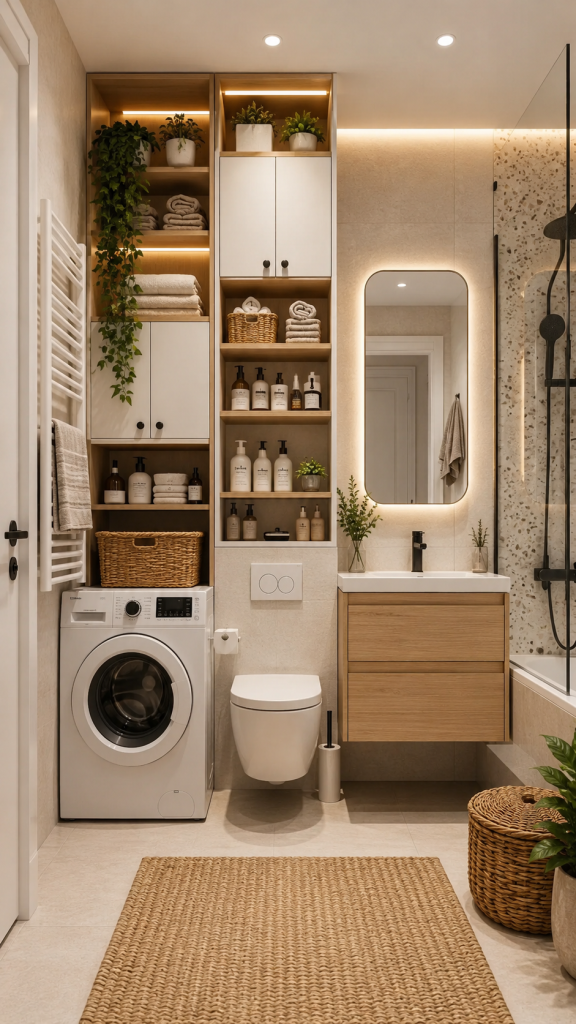
When floor space disappears beneath a washing machine and essential fixtures, your walls become the most powerful organizational tool you have. Stack shelves from waist height to ceiling, anchor tall narrow cabinets beside the washing machine, and treat every vertical surface as usable real estate.
This approach lifts clutter off counters and floors, transforming dead air above appliances into purposeful zones where detergent, spare towels, and toiletries find permanent homes without crowding your movement through the room.
Tip: Choose cabinet depths that match your washing machine’s depth so the wall reads as one cohesive unit rather than a collection of mismatched additions.
2. Conceal the Washing Machine Behind Custom Cabinet Doors
Most people accept the washing machine as a visual fixture. It does not have to be.
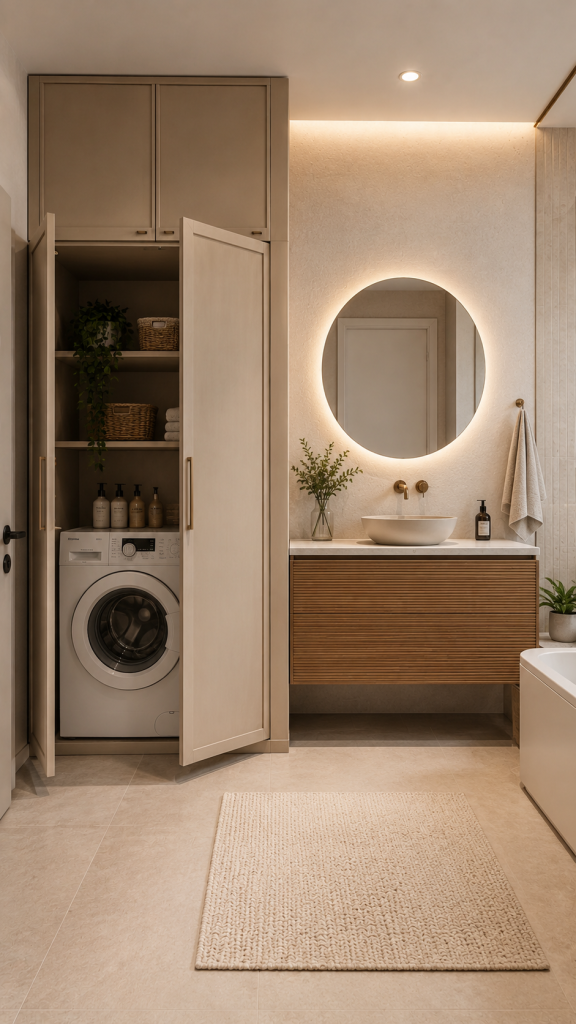
Fitting your washing machine inside a floor-to-ceiling cabinet unit with matching doors allows it to disappear entirely when not in use. The room reads as a clean, considered bathroom rather than a combined laundry space. Open the doors for laundry day, close them again, and the transformation takes under a second.
This approach works brilliantly in bathrooms where you entertain guests or simply want a space that feels like a proper retreat rather than a utility room. Choose cabinet doors that match your vanity finish for a seamless built-in effect that looks genuinely intentional.
Could hiding your appliance entirely be the single most transformative decision in your bathroom redesign?
3. Stack Washer and Dryer Vertically to Save Precious Floor Area
Think of vertical stacking as the skyscraper solution for appliances.
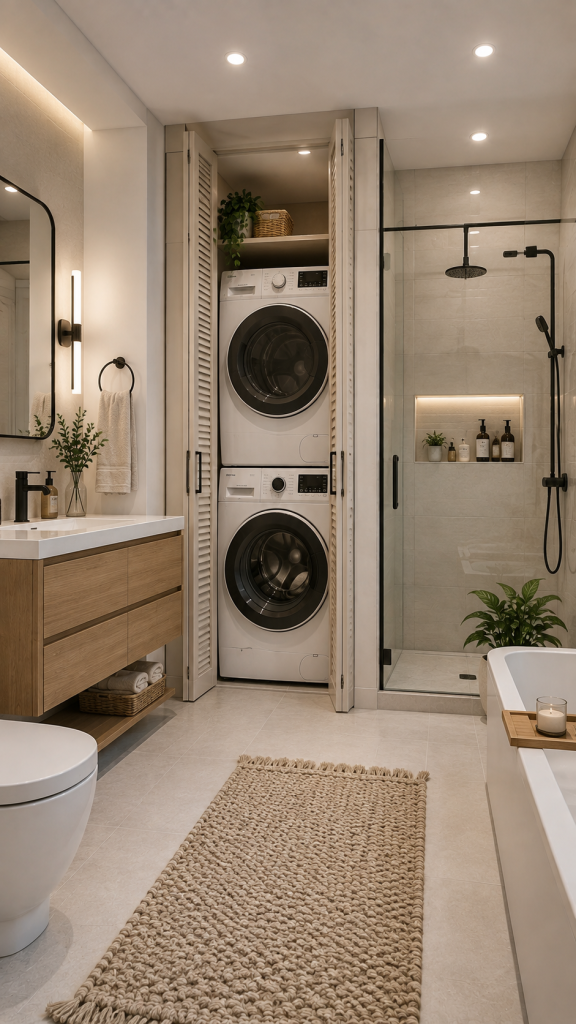
When a side-by-side washer and dryer arrangement devours precious floor width, placing the dryer directly on top of the washer reclaims that horizontal real estate for movement, storage, or simply breathing room. This configuration fits snugly into narrow alcoves and tight corners that side-by-side units could never occupy.
Read: White Bathroom Ideas
Front-loading machines make this setup far more practical than older top-loaders, and modern stacking kits secure the dryer safely against vibration. Some setups tuck neatly behind bifold doors that fold flat when opened making the entire laundry zone vanish when you need the bathroom to feel like a bathroom again.
4. Install a Cabinet Directly Above the Washer for Overhead Storage
You probably look at the empty wall above your washing machine every single day without registering its potential. That space is not dead it is simply waiting.
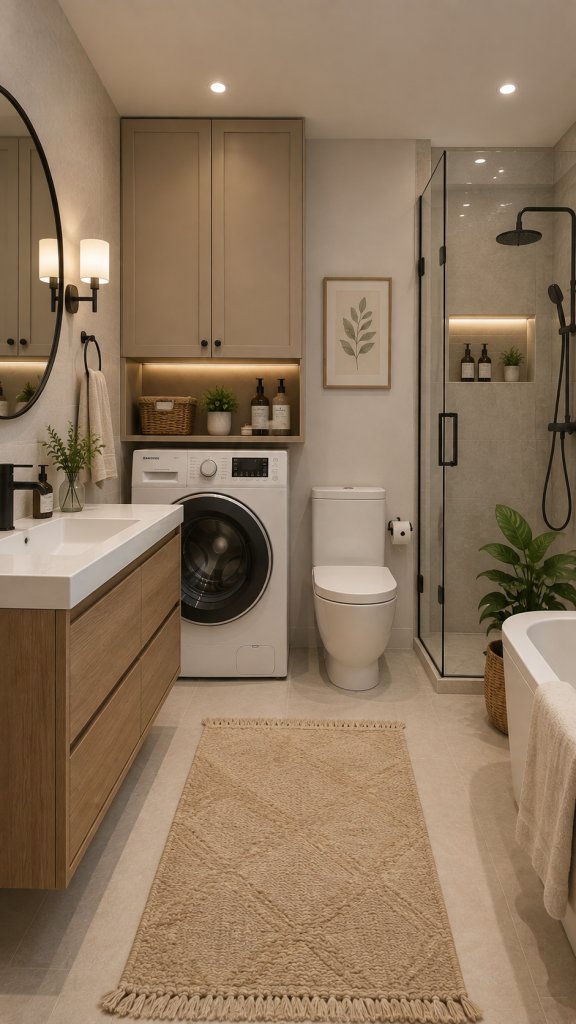
A shallow wall cabinet installed directly above the washing machine converts that overlooked zone into a home for cleaning products, spare linens, laundry pods, and bathroom extras. Choose a unit with solid doors rather than open shelving concealed storage maintains the streamlined look that open surfaces constantly threaten to undermine.
Warning: Measure twice before drilling. Vibrations from spin cycles can work loose any cabinet that is not anchored properly into wall studs. When in doubt, ask a professional to install it the ceiling above a running washing machine is not the place for shortcuts.
5. Choose a Floating Vanity to Keep the Floor Visually Open
Imagine opening your bathroom door and seeing uninterrupted floor tile rather than a wall of cabinet bases and pedestal legs. That visual breathing room changes everything about how a room feels to be in.
Wall-mounted vanities hover above the floor, revealing tile beneath them and restoring a sense of openness that grounded furniture quietly steals. When your washing machine already claims a significant portion of the floor, every other fixture that exposes floor rather than covering it compounds the effect dramatically.
The gap beneath a floating vanity also simplifies cleaning considerably no maneuvering a mop around a cabinet base, no trapped dust in corners that fingers can barely reach. Practical and beautiful, which is exactly the combination a dual-purpose bathroom demands.
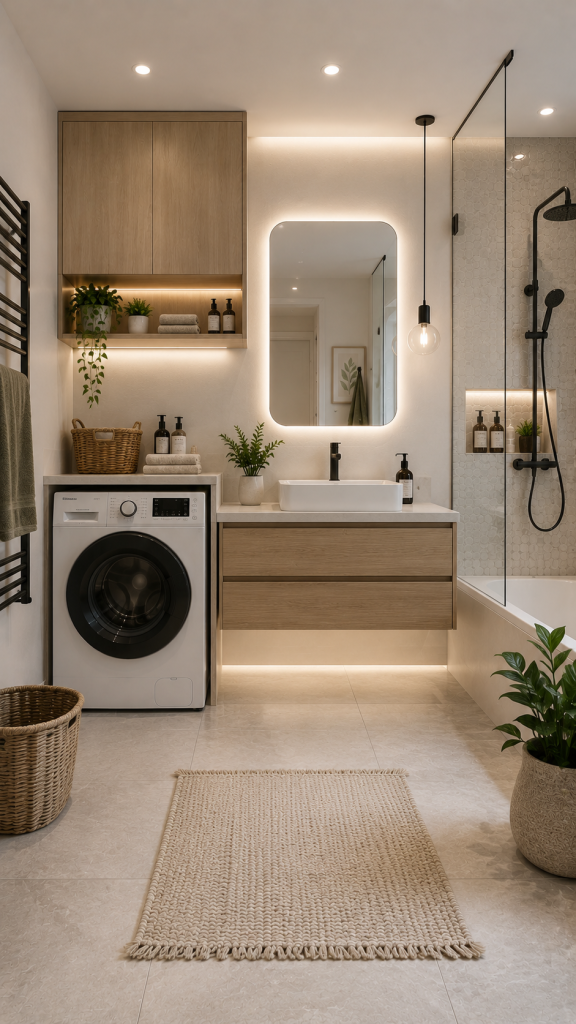
6. Highlight a Backlit Mirror to Elevate the Entire Room’s Ambiance
Most bathrooms rely on a single overhead bulb that flatters nobody and illuminates everything with the warmth of a car park. A backlit mirror offers something entirely different.
The soft glow emanating from behind the glass diffuses evenly across the room, eliminating the harsh shadows that make morning routines feel clinical and uninviting. This lighting style moved from boutique hotels into residential bathrooms for good reason it creates atmosphere rather than just visibility. Mounted above your vanity, a backlit mirror seems to float against the wall, contributing to the airy quality that compact bathrooms need most.
Pair it with a dimmer switch so you control the intensity bright for grooming, soft for a late evening bath when the washing machine is running quietly in the background.
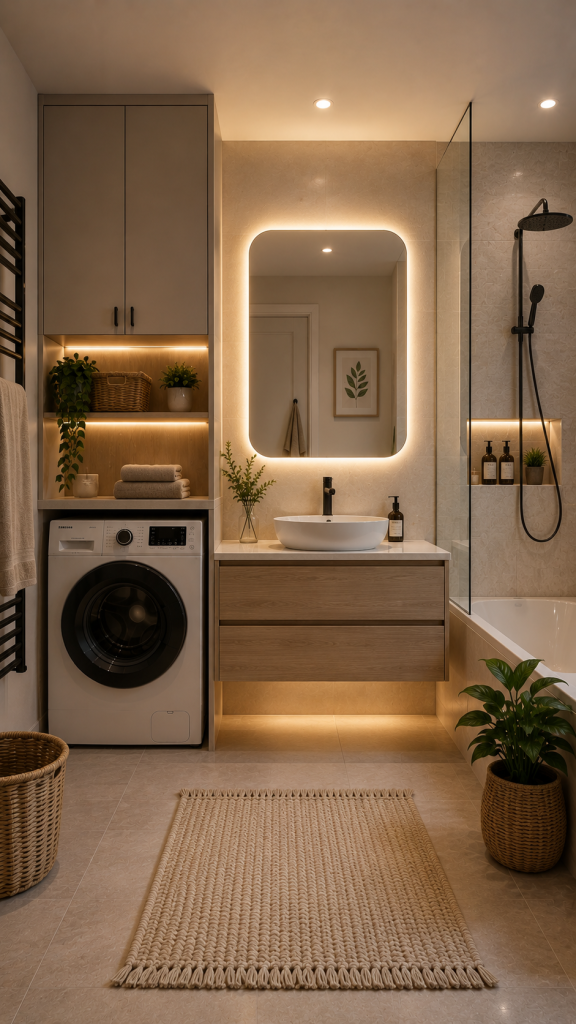
7. Integrate Lush Greenery to Soften the Machine’s Visual Presence
Plants in bathrooms might sound predictable, but they genuinely work and in a bathroom with a washing machine, they do something specific: they humanize a mechanical space.
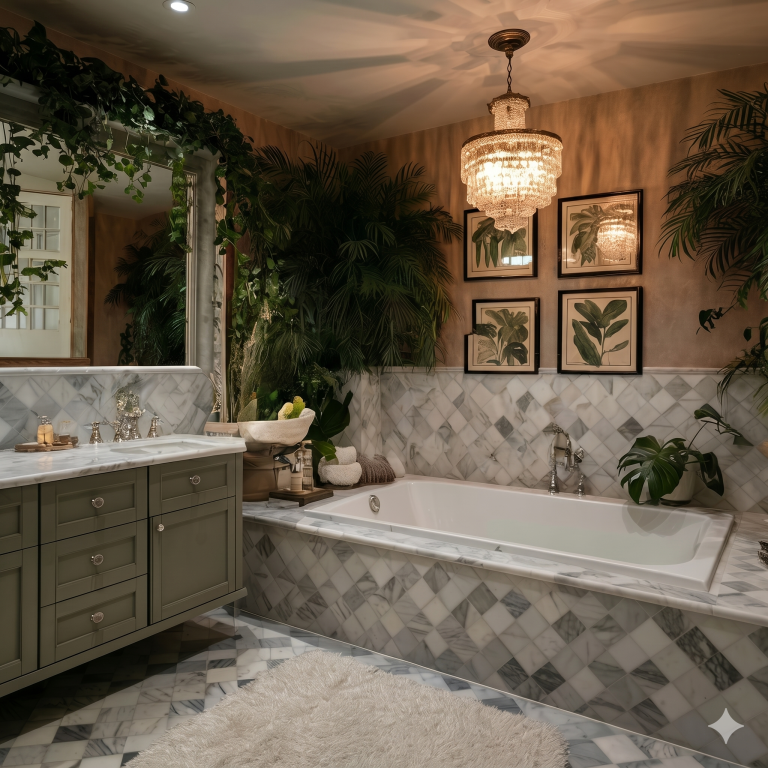
The presence of a washing machine introduces an industrial quality that hard tile and chrome fixtures only amplify. A trailing pothos placed on top of the machine, a snake plant on a floating shelf above it, or a fern positioned on the windowsill nearby softens that mechanical presence with living texture. Green hues contrast beautifully against white tile or grey cabinetry, introducing color without the commitment of paint or wallpaper.
Read: Green Bedroom Ideas
Ferns, pothos, and snake plants all thrive in the humidity that bathroom environments generate naturally they ask for very little and give considerable warmth in return. Expect wellness-focused bathroom design to keep pushing greenery further into these functional spaces as homeowners recognize what plants actually do for mood and atmosphere.
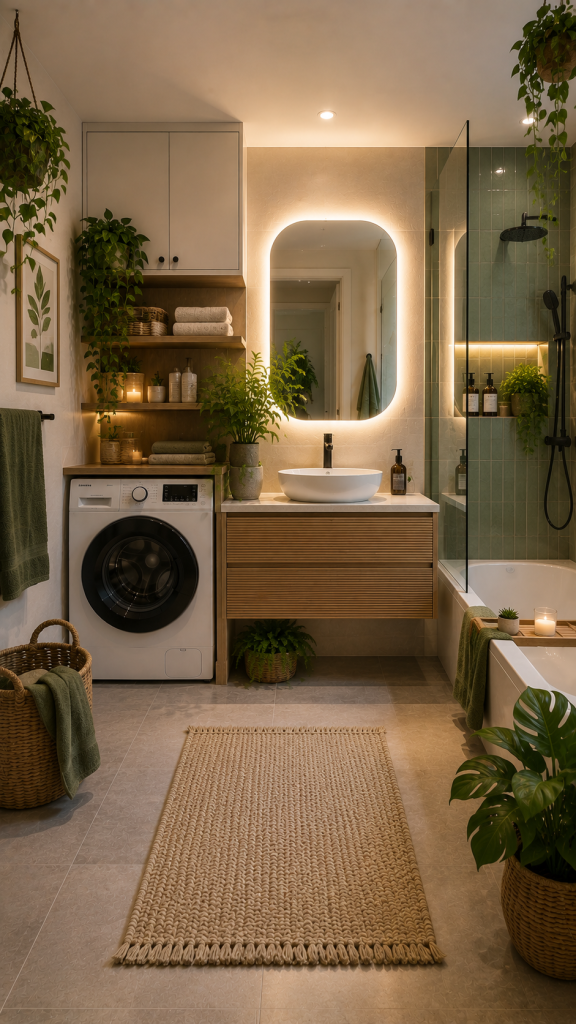
8. Select Neutral Grey Tile to Unify the Entire Bathroom Zone
Bathrooms with competing colors and patterns feel chaotic at the best of times. Add a washing machine to the layout and visual busyness becomes genuinely overwhelming. Grey tile whether in matte porcelain, natural stone, or large format slabs provides a calming, cohesive backdrop that stops demanding attention.
This neutral foundation lets you layer in texture through woven baskets, wood accents, and greenery without overloading the senses. Light greys open and brighten; deeper charcoals ground and anchor. The monochromatic palette creates cohesion across shower walls, flooring, and splashback linking every element into a unified whole that allows the washing machine to fade gracefully into the background.
In essence, grey tile becomes the quiet hero that lets your design choices do the talking.
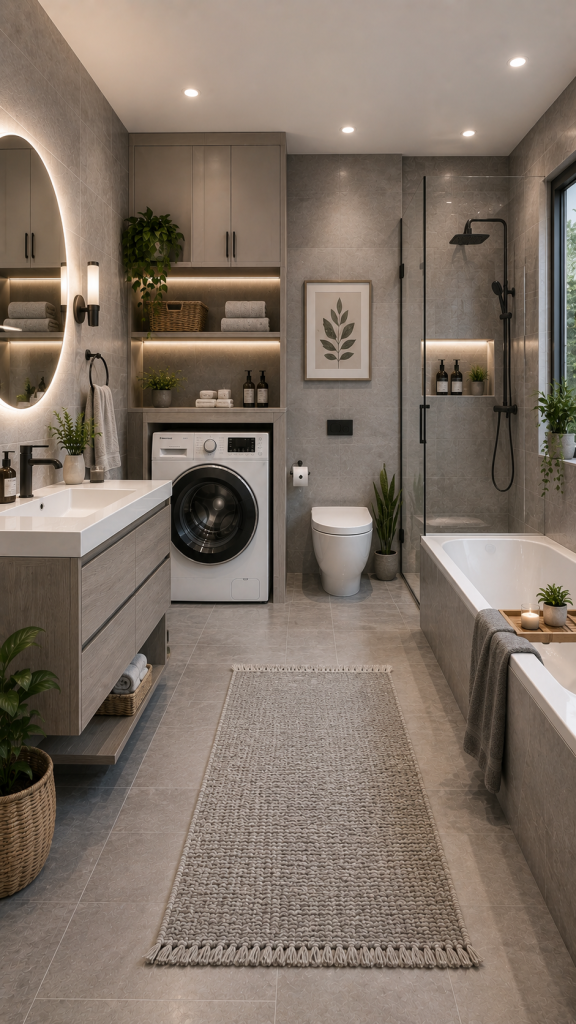
9. Balance Natural Wood Elements to Prevent a Sterile Feel
Can a room housing a running washing machine still feel spa-like? Yes and wood is the material that makes it possible.
Natural timber introduces warmth that tempers the cold efficiency of hard tile and white appliances. A floating vanity in light oak or warm walnut, an open wooden shelf for towels, a teak bath mat, or even a reclaimed wood ladder hung on the wall adds organic texture that no painted surface can replicate. The material contrast prevents the room from reading as purely utilitarian and modern design thrives precisely on this kind of tension between the functional and the beautiful.
Wood does not need to dominate to make its presence felt. Even a single wooden element anchors the room in warmth and keeps it from tipping into clinical territory. Think of it as layering each material playing a supporting role that elevates the whole composition beyond the sum of its parts.
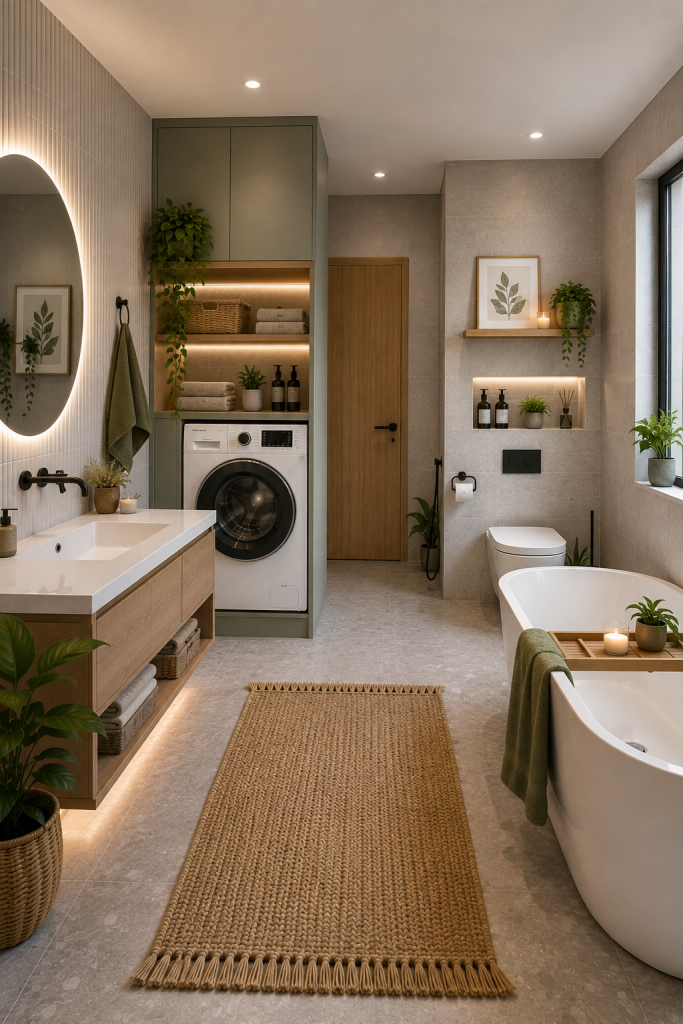
10. Place a Woven Laundry Basket to Organize and Decorate Simultaneously
Here is a detail most people overlook: the laundry basket does not need to hide in a closet.
A handsome woven seagrass or rattan basket positioned beside your washing machine becomes a designated collection point for used towels and clothes, preventing them from piling haphazardly on the machine lid or bathroom floor. This organizational move grew popular in Scandinavian interiors precisely because it treats functional objects as design opportunities rather than problems to conceal.
The natural texture of a woven basket adds visual interest. The open weave promotes airflow so towels dry rather than sitting damp and mildewing. On laundry day, you lift the basket and transfer its contents directly into the machine a small friction removal that makes the routine feel smoother than it has any right to.
It is a minor adjustment that improves daily life more than its simplicity suggests.
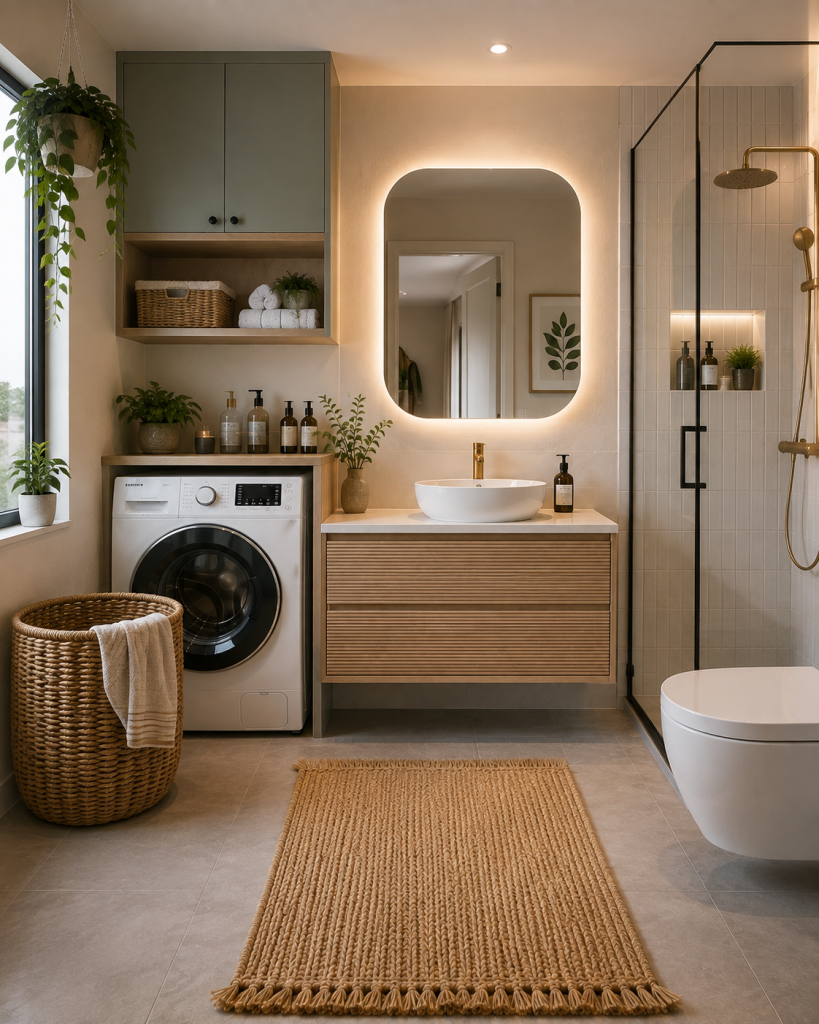
11. Incorporate Patterned Tile Flooring to Define Zones Beautifully
Your floor deserves as much attention as your walls especially when it anchors both a bathing zone and a laundry zone simultaneously.
Patterned tiles create visual interest that distracts from the utilitarian presence of a washing machine while doing something equally important: defining different areas of the room without physical barriers. A geometric design in black and white can mark the laundry corner while complementing a neutral shower area. The repeating motif unifies the room’s competing functions, making the layout feel intentional rather than improvised.
Hexagonal floor tiles, encaustic-style patterns, Moroccan zellige, and classic checkerboard each tell different stories yet all achieve the same result. A bold floor pattern turns the practical necessity of fitting a washing machine into an opportunity to make the room more interesting, not less.
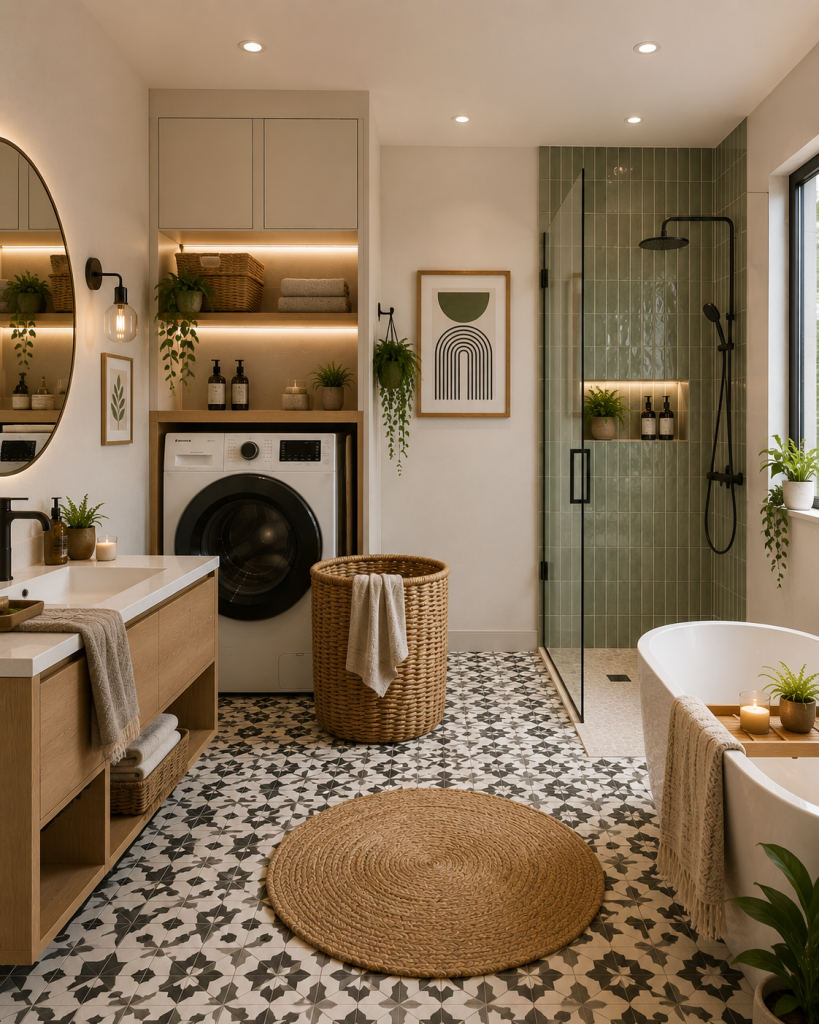
12. Add a Deep Utility Sink for a Truly Functional Laundry Bathroom
Shallow bathroom basins are designed for hand washing. They were never meant to handle soaking stained linens, rinsing delicates, or scrubbing heavily soiled items by hand. A deep utility-style sink changes the entire capability of your bathroom laundry space.
A rectangular drop-in deep basin set into a cabinet that provides storage below handles tasks that overflow a standard vanity bowl soaking large items, hand-washing woolens, filling buckets without contortion, even bathing a small dog. The extra depth contains splashes and allows generous water volume that shallow sinks simply cannot accommodate.
Integrated beside your washing machine, a deep sink transforms your bathroom from a space that happens to contain a washer into a genuine multi-functional room designed from the beginning to handle both roles with equal capability.
Measure your available space carefully and look for deep-basin options that balance utility with aesthetics they exist in a far wider range of styles than most people expect.
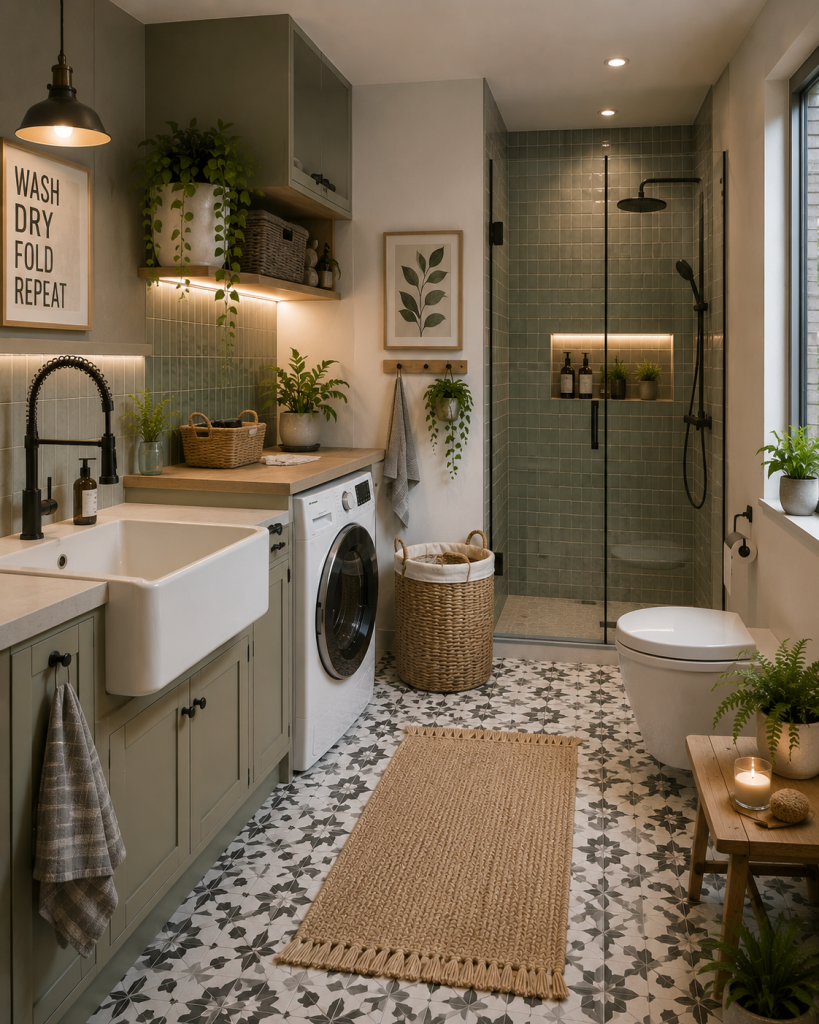
13. Contrast Dark Cabinetry Against White Surfaces for Striking Drama
First, consider the power of opposition. Deep navy, charcoal, or forest green cabinetry anchoring a white-tiled bathroom creates visual tension that energizes rather than suffocates the space. Second, this high-contrast approach defines zones with clarity the laundry area anchored by deep tones, the bathing area kept bright and airy.
The interplay between dark and light prevents the monotony that neutral-only bathrooms can fall into, and it adds a sophistication that makes even a modest washing machine corner look curated rather than crammed in. White subway tiles and marble-look countertops pop against deep cabinetry in a way they simply cannot against white or cream units.
Read: Dark Bathroom Ideas
The washing machine itself, typically white or silver, sits naturally within the lighter zone becoming part of the composition rather than an interruption of it.
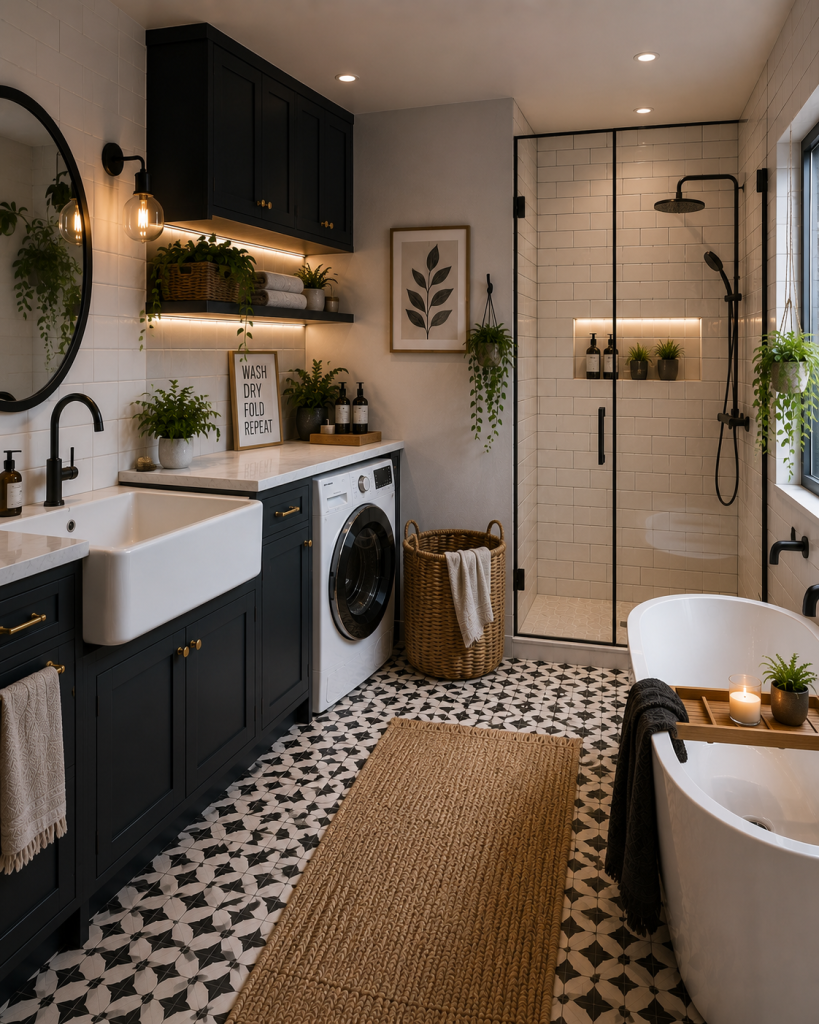
14. Install Glossy Subway Tiles to Amplify Light Throughout the Room
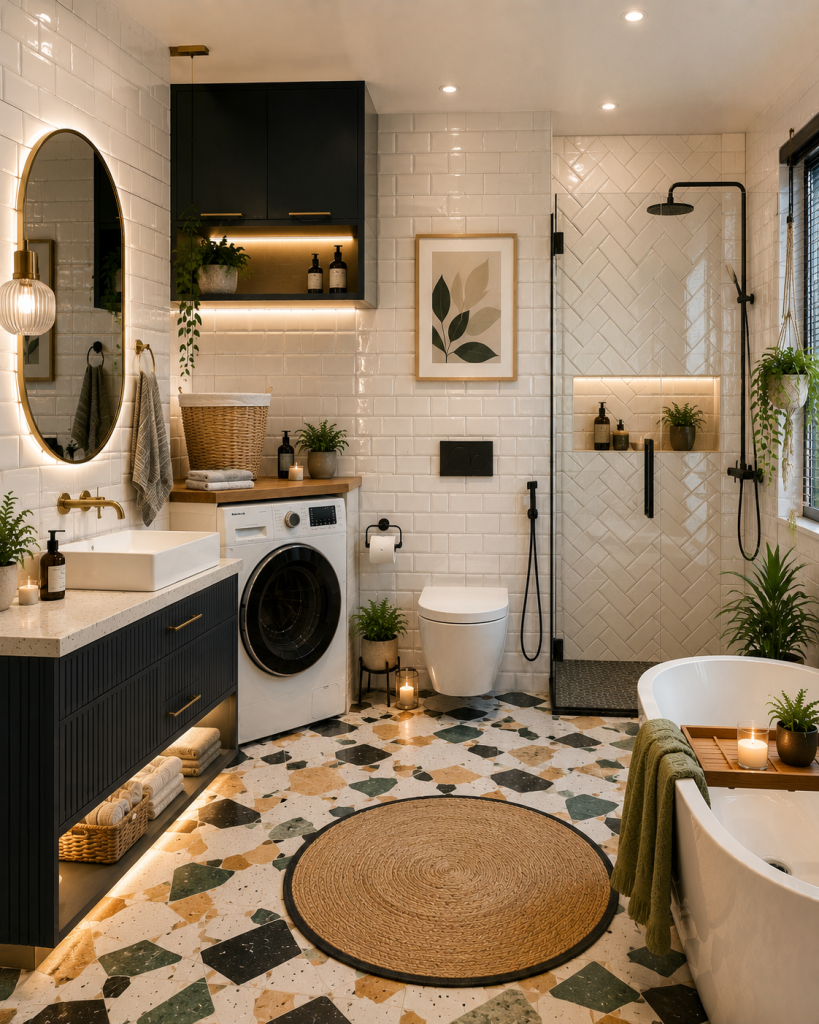
Compared to matte finishes that absorb light, glossy subway tiles bounce it continuously around the room amplifying whatever natural or artificial illumination the space receives. This reflective quality proves especially valuable in interior bathrooms and laundry nooks without windows, where every photon counts.
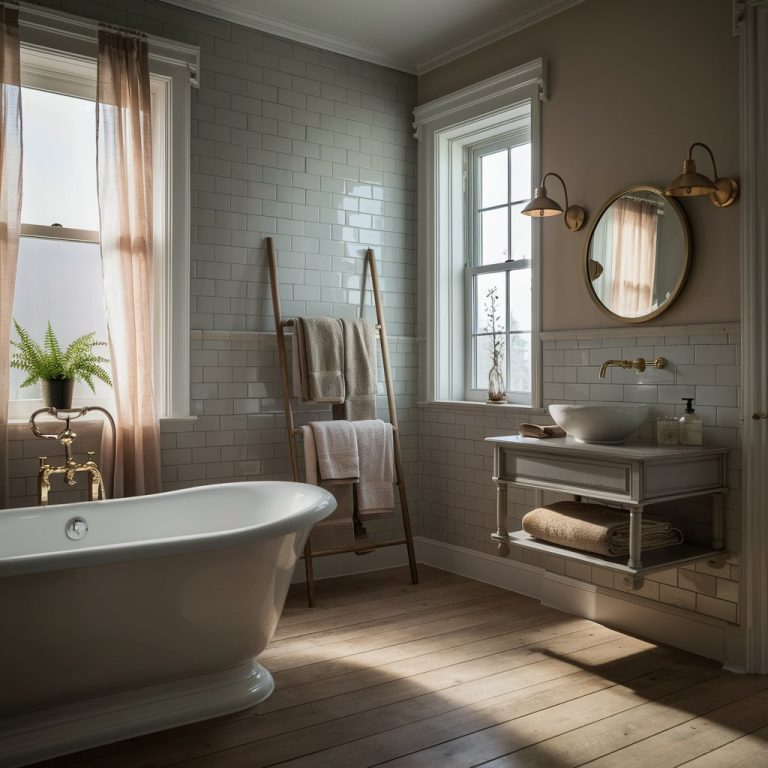
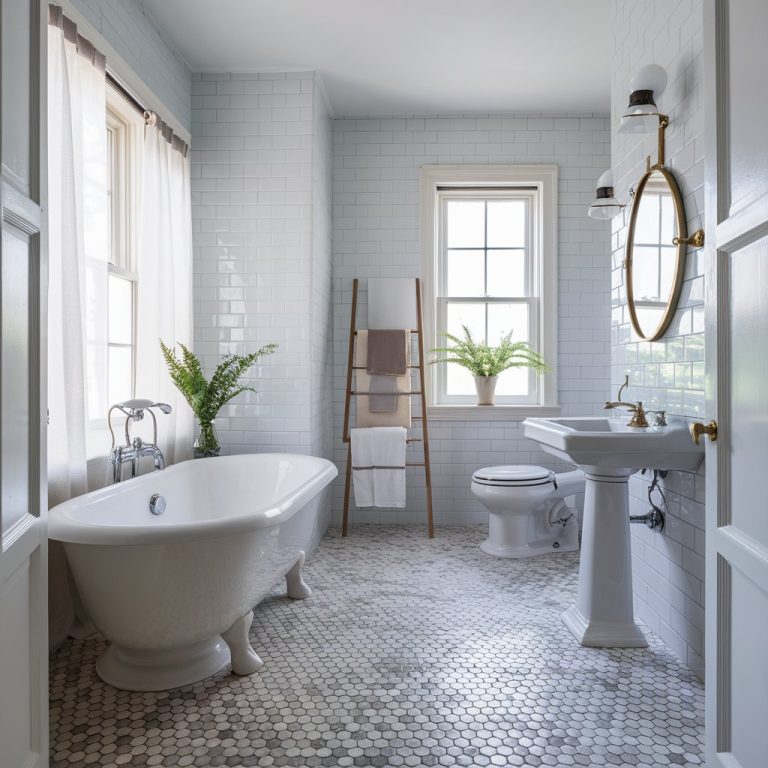
The classic rectangular format installs in multiple configurations traditional brick lay, vertical stack, herringbone, or offset giving you genuine flexibility to customize the look without changing the fundamental material. Glossy whites and soft creams never feel dated, and their smooth surface wipes clean with minimal effort: a practical consideration in any zone near laundry products and detergent splashes.
Could a simple tile swap genuinely refresh your entire bathroom aesthetic without touching a single fixture? In many rooms, yes absolutely.
Read: Bathroom with Bathtub Ideas
15. Frame the Shower with Frameless Glass for an Open Spacious Feel
Why does a glass-enclosed shower feel so much larger than a curtained tub or a framed shower door? The transparency allows your gaze to travel beyond the immediate shower footprint, registering the room’s full dimensions rather than stopping at an opaque surface two feet in front of you.
In a bathroom where a washing machine already occupies significant visual weight, creating openness wherever possible becomes critically important. Clear frameless glass panels around the shower allow the eye to pass through continuously making the room read as larger than its measurements suggest. A minimal frame in matte black or brushed nickel adds necessary structure without introducing visual bulk.
The effect compounds when you pair frameless glass with large-format floor tiles and minimal grout lines an uninterrupted visual plane that stretches from the shower floor to the far wall without interruption.
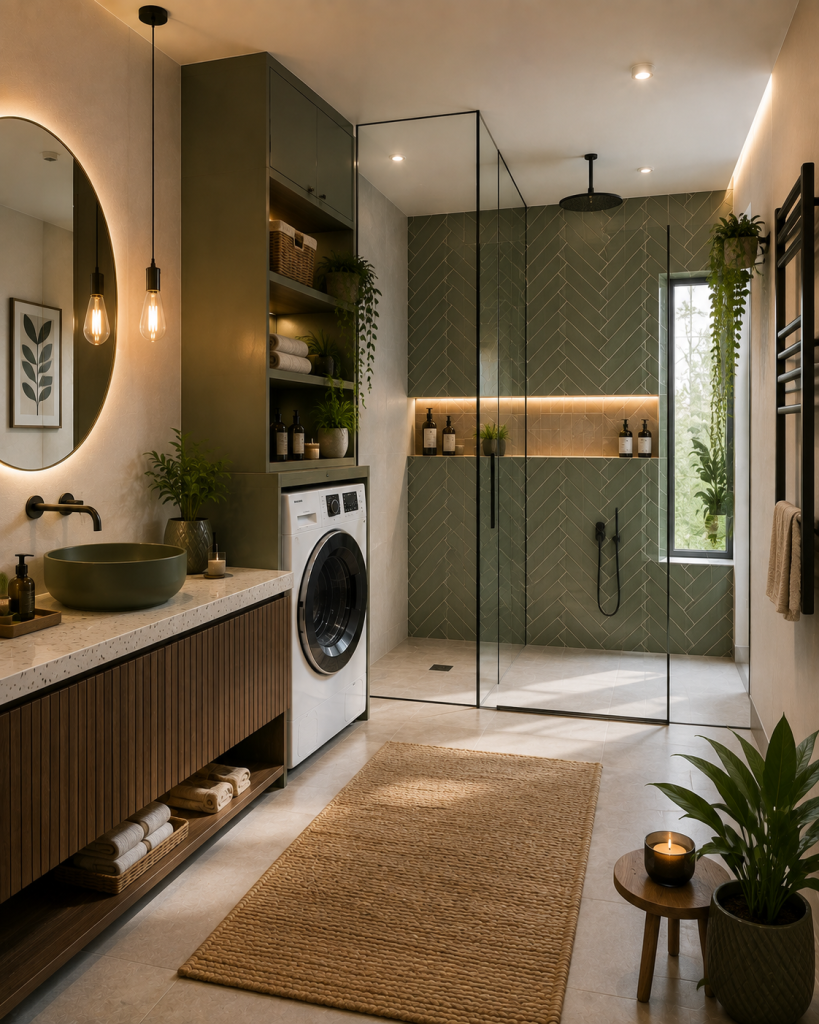
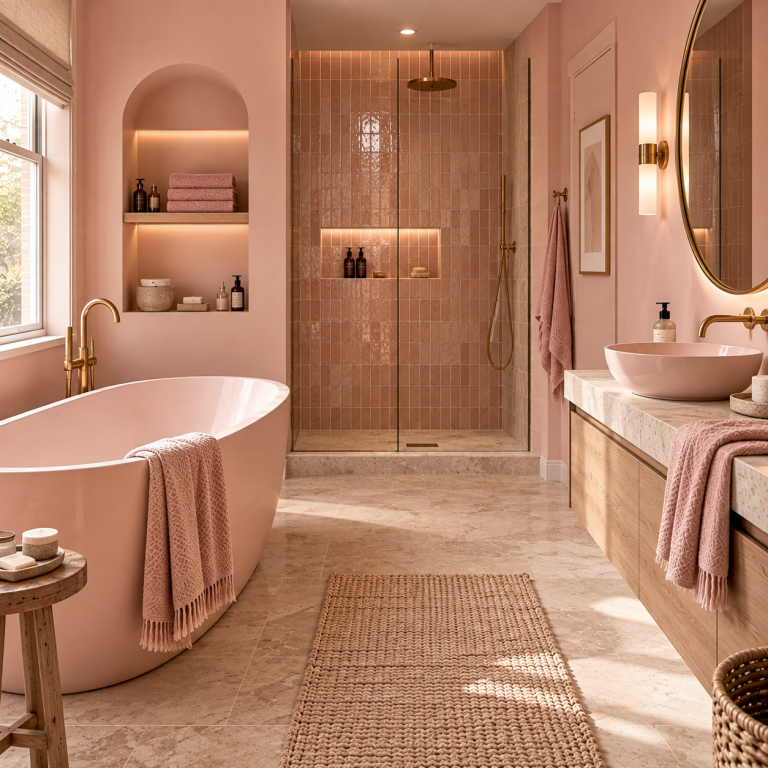
16. Use a Round Mirror to Visually Expand a Tight Bathroom Layout
Round mirrors get overlooked in favor of rectangular models far too often, yet their curves do something specific in bathrooms dominated by straight lines and boxy appliances they soften.
A generously sized circular mirror above the vanity reflects light from multiple angles simultaneously, bouncing it around the room and making walls appear to recede and ceilings appear to lift. This optical expansion works as a genuine counterweight to the visual mass a washing machine introduces. The eye registers the round mirror’s reflected space and interprets the room as larger than its boundaries.
As a secondary benefit, the circular shape brings a note of design intention to rooms that might otherwise feel purely functional signaling that this space, appliances and all, has been considered rather than assembled.
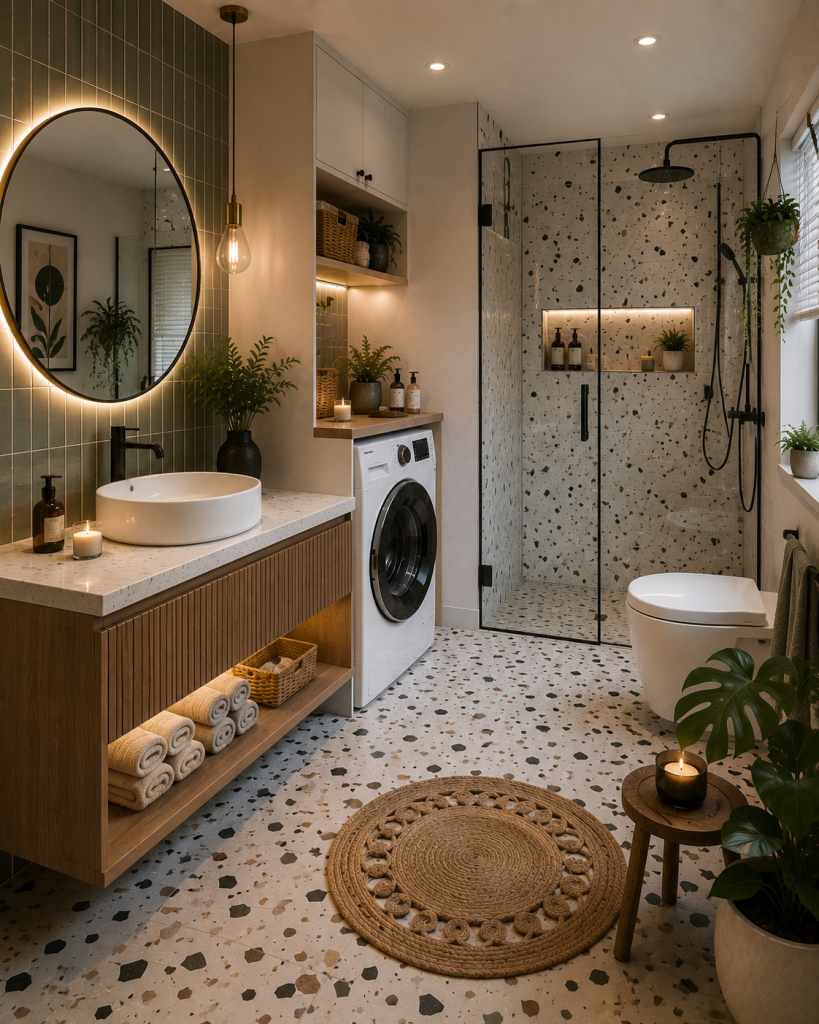
17. Introduce Vertical Green Tile as a Sophisticated Color Accent
Bathrooms stuck in relentless beige and white call out for colour. Yet bold hues can overwhelm tight spaces and date quickly. Vertical zellige or subway tiles in sage, eucalyptus, or soft emerald green offer precisely the right middle path distinctive without dominating, warm without demanding.
The vertical orientation of these tiles draws the eye upward, elongating walls and making ceilings feel appreciably higher. Green’s natural associations with growth, calm, and the outdoors actively counter the industrial quality that a washing machine can bring to a room. Install these tiles as a shower accent wall, behind the vanity, or even as a full-height panel beside the washing machine itself letting white or neutral surfaces fill the remaining walls.
In short, green Bathroom tile modernizes a bathroom laundry space while grounding it in something that feels organic rather than purely manufactured.
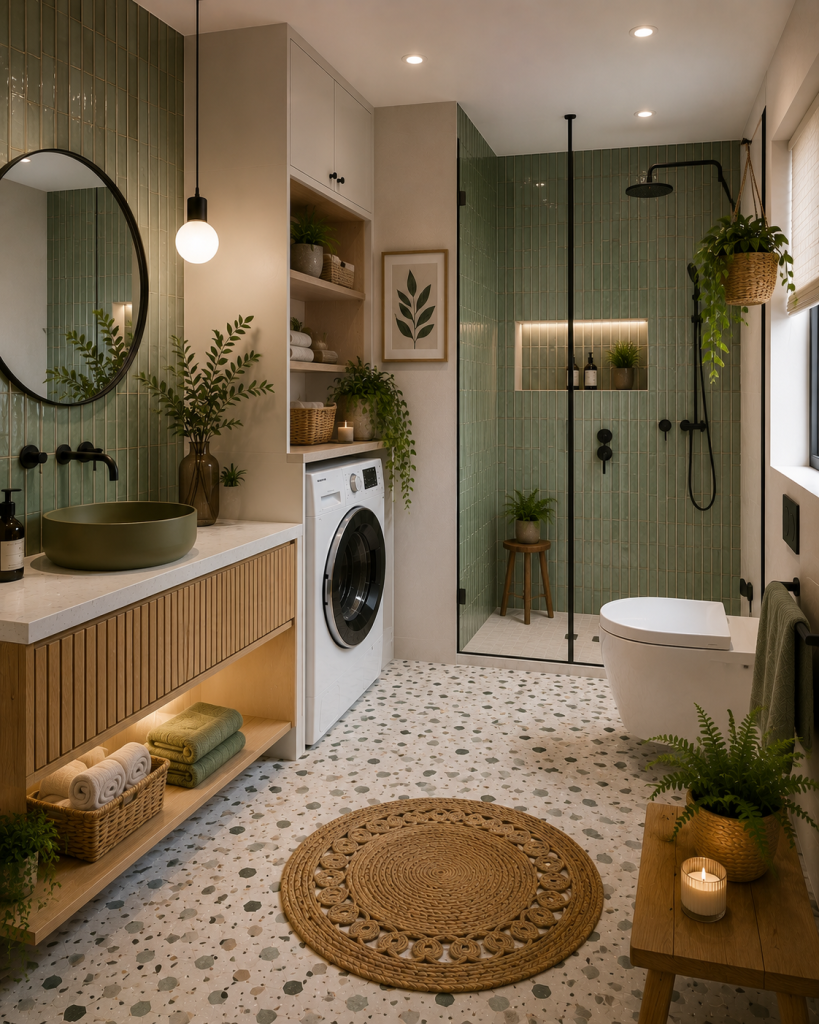
18. Place a Wooden Bench to Introduce Spa Energy Into the Laundry Zone
Wellness-focused bathroom design has pushed hard against the idea that rooms containing appliances must feel industrial. A teak or cedar bench positioned just outside the shower or beside the washing machine serves multiple purposes simultaneously: somewhere to place folded laundry, a surface for displaying candles and plants, a seat while you dry off after a shower.
The presence of natural wood humanizes the most clinical of spaces. Teak resists moisture naturally and ages into a warm silvery patina that adds character over time rather than deteriorating. The bench invites a slower pace it suggests that even in a room with a running washing machine, there is space to pause, to breathe, to treat the routine as something worth taking a moment over.
Expect wooden benches and other spa-inspired organic elements to become increasingly standard in thoughtfully designed bathroom laundry rooms as wellness continues to shape how people think about domestic spaces.
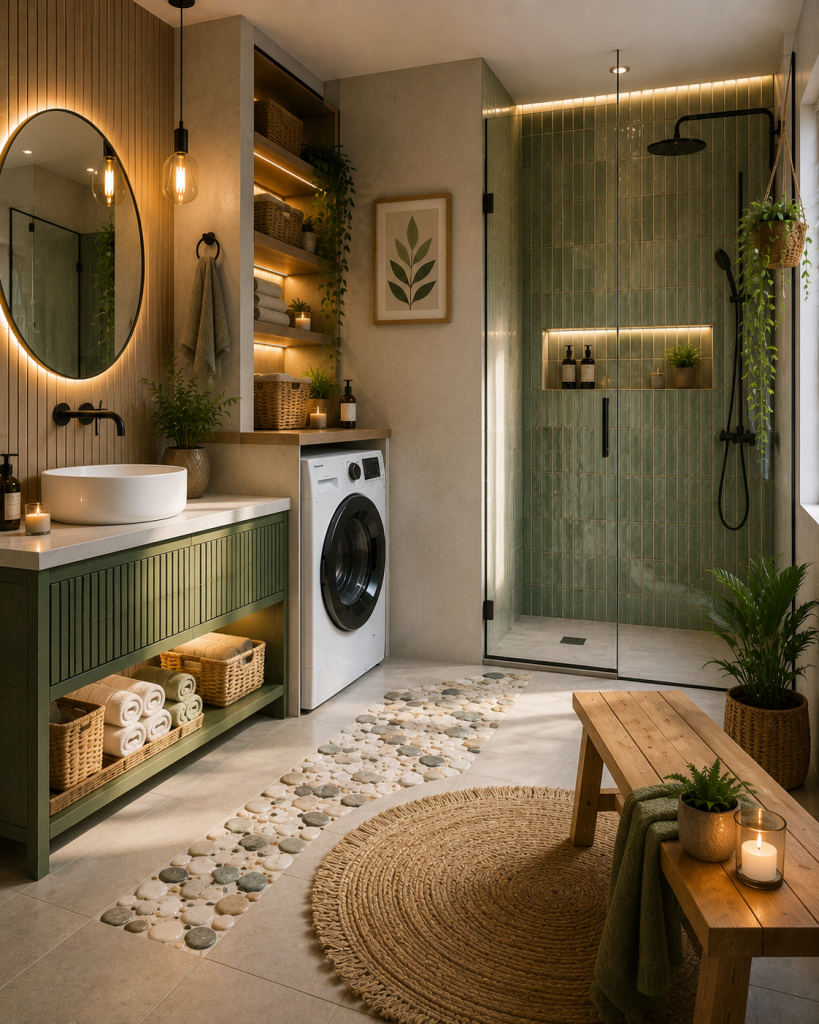
19. Add a Woven Rug to Soften the Room’s Hard Surfaces
If you choose a rug rated for moisture cotton, bamboo fibre, or quick-dry synthetic you introduce a softness underfoot that hard tile simply cannot provide regardless of its quality or finish.
This layer of textile warmth breaks up the rigid geometry of a small bathroom, particularly one dominated by the boxy mass of a washing machine and angular fixtures. A runner placed along the vanity or a small mat beside the shower zone adds warmth and visual weight exactly where the room needs grounding. Patterns or colors that echo your tile or cabinetry tie the room together, making separate elements read as part of a coherent scheme.
As a result, the rug becomes something more than a practical accessory. It anchors the design and signals clearly that this space, washing machine and all, deserves the same thoughtful styling as every other room in the home.
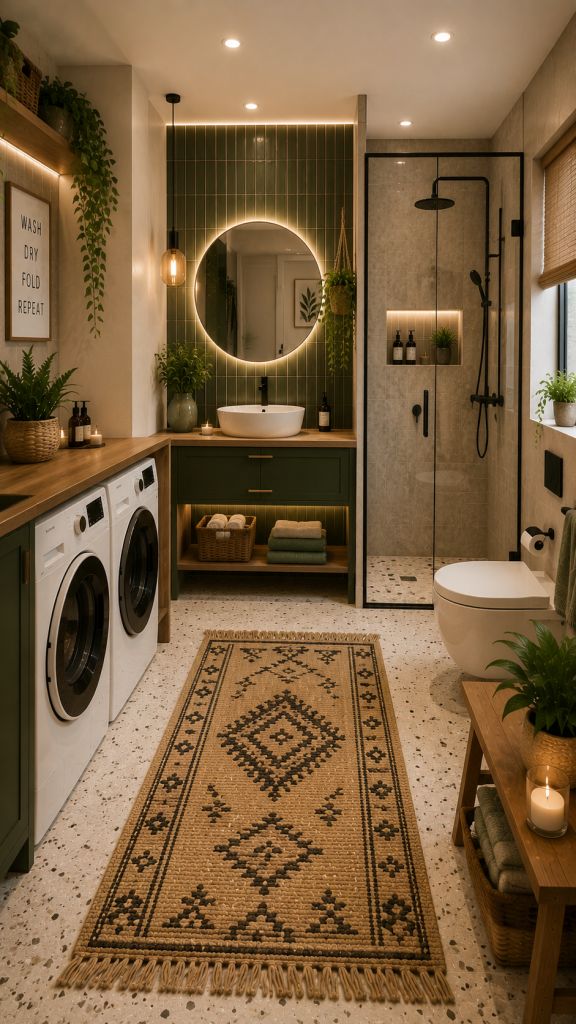
20. Arrange Trailing Plants on Top of the Washing Machine for Softness
This is perhaps the simplest idea in the entire list and one of the most effective.
A trailing pothos, a small spider plant, or a cascading string of pearls placed directly on top of the washing machine introduces living softness to the most mechanical surface in the room. The contrast between green organic trailing stems and the hard white appliance beneath creates exactly the kind of unexpected visual tension that good interior design relies on.
The washing machine top is flat, stable, and typically empty prime real estate for a small pot that costs almost nothing and transforms how the entire corner of the room reads. As the plant grows and trails further down the machine’s sides, the appliance itself begins to disappear beneath it.
It costs almost nothing. It takes thirty seconds to arrange. And yet it does more to make a bathroom laundry room feel like a considered, beautiful space than many ideas ten times the effort.
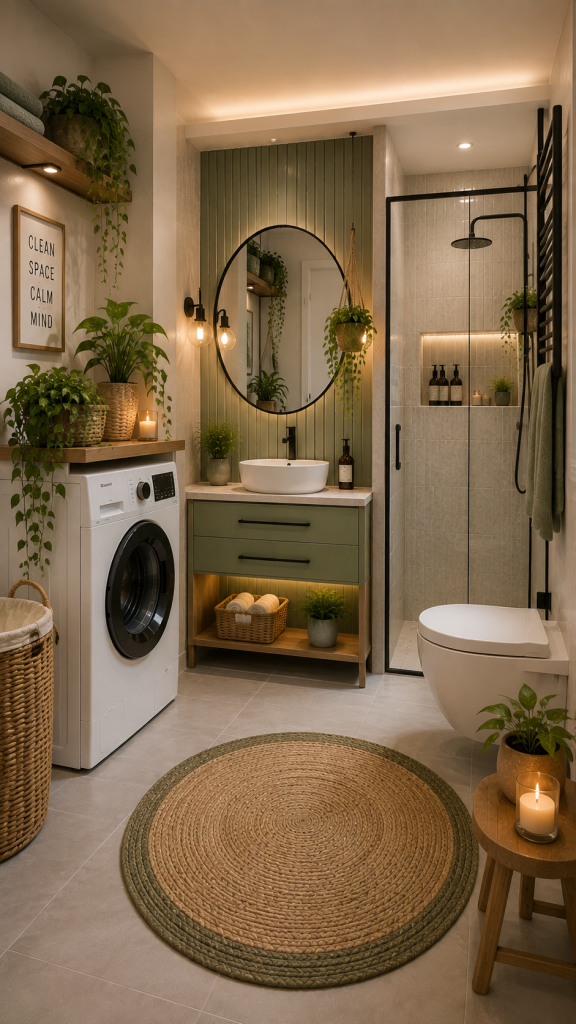
Your bathroom does not have to choose between beauty and utility it can genuinely deliver both when approached with intention and creativity. The washing machine is not the obstacle it might appear. It is simply a starting point that pushes you toward smarter, more considered design decisions than you might otherwise have made.
Start with one idea that resonates. Stack the appliances to reclaim floor space. Introduce a backlit mirror to soften the light. Hang a trailing plant on the wall above the machine. Small changes compound into transformations that make daily routines feel less like chores and more like rituals worth looking forward to.
Read: Coffee Bar Ideas to Create a Cozy, Stylish Coffee Station at Home
Embrace the constraint, trust your instincts, and watch your compact bathroom evolve into a space that works exactly as hard as it looks good.